

You will not be allowed to compare more than 4 products at a time
View compareOVONIC 5200mAh 50C 11.1V 3S Lipo Battery with Deans & XT60 Connector for RC Plane, Quadcopter, Helicopter, Car
OVONIC 5200mAh 50C 11.1V 3S Lipo Battery with Deans & XT60 Connector for RC Plane, Quadcopter, Helicopter, Car
Regular price
$40.05 USD
Sale price
$40.05 USD
Regular price
$40.05 USD
Unit price
per
Shipping calculated at checkout.
Out of stock
Sold by ToyTooth — Your trusted kids' toy store.
Returns accepted within 30 days | support@toytooth.com
Shipping Information
- Shipping calculated at checkout
- Processing Time: 3–5 business days
- Estimated Delivery: 6–10 business days after dispatch
- Securely packed to ensure your purchase arrives in perfect condition
- Tracking number sent via email once dispatched
Returns & Refund
Returns accepted within 30 days of delivery.
Damaged or Defective Item
Free return shipping + replacement or full refund
Wrong Item Received
Free return shipping + replacement or full refund
Change of Mind
Return shipping at customer's expense · Item must be unused & in original packaging
All returns require a Return Authorization (RA) number before sending.
View Full Return & Refund Policy
Safety & Compliance
⚠️
California Proposition 65 Warning
Some products sold on this website may expose you to chemicals known to the State of California to cause cancer, birth defects, or other reproductive harm.
www.P65Warnings.ca.gov
🛒
General Product Safety Advisory
Always read the product label, instructions, and safety warnings before use. Do not use damaged or modified products. Store products in appropriate conditions as specified by the manufacturer.
Keep all products out of reach of children unless specifically designed for their use.
ℹ️
Product Authenticity & Notice
All products sold by ToyTooth are 100% authentic, sourced directly from trusted toy suppliers and brands. Product colors and dimensions may vary slightly from images due to screen calibration and manufacturing tolerances.
ToyTooth — Fun Toys for Every Kid, Delivered to Your Door.
Share
Couldn't load pickup availability
Guarantee safe and secure checkout
Description
Description
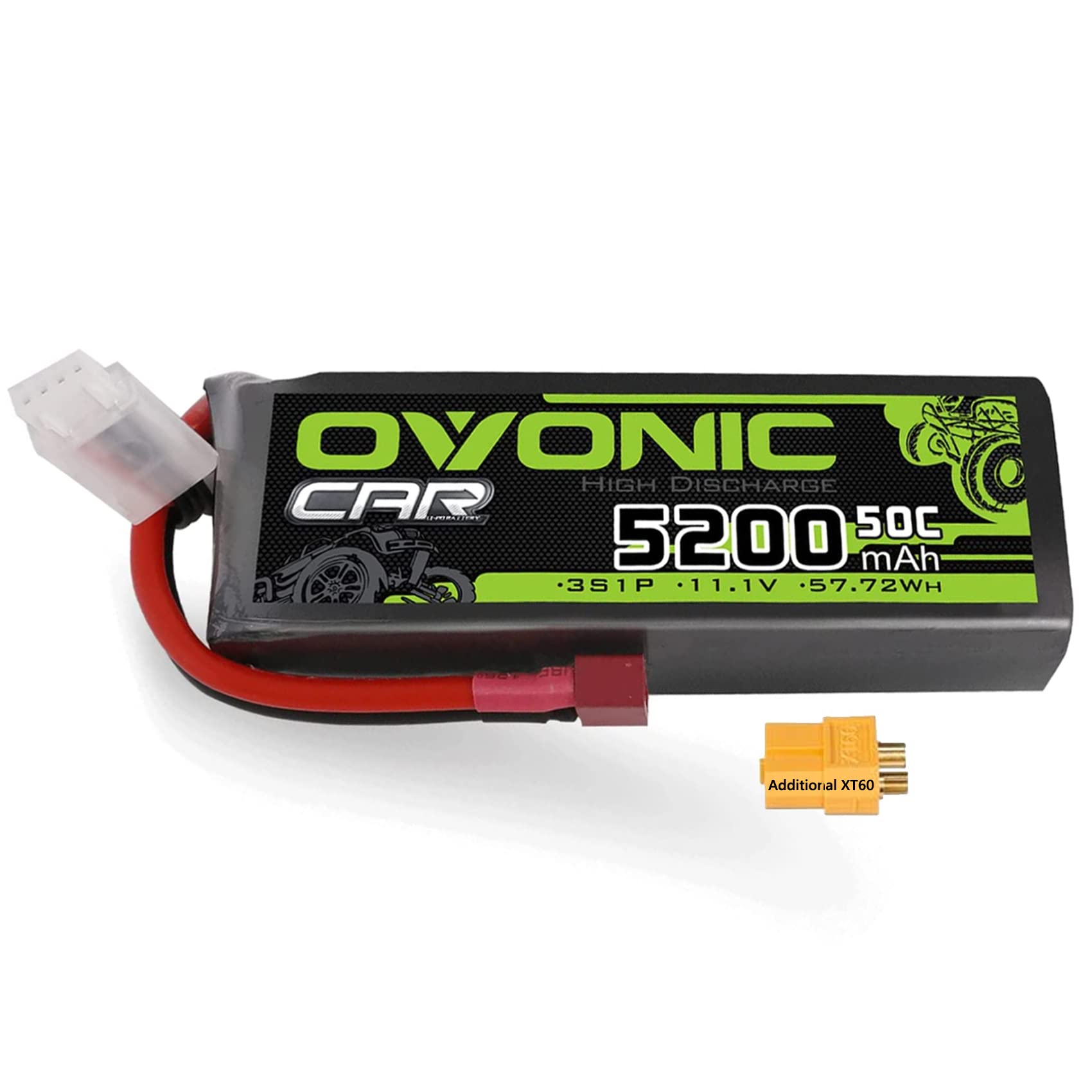
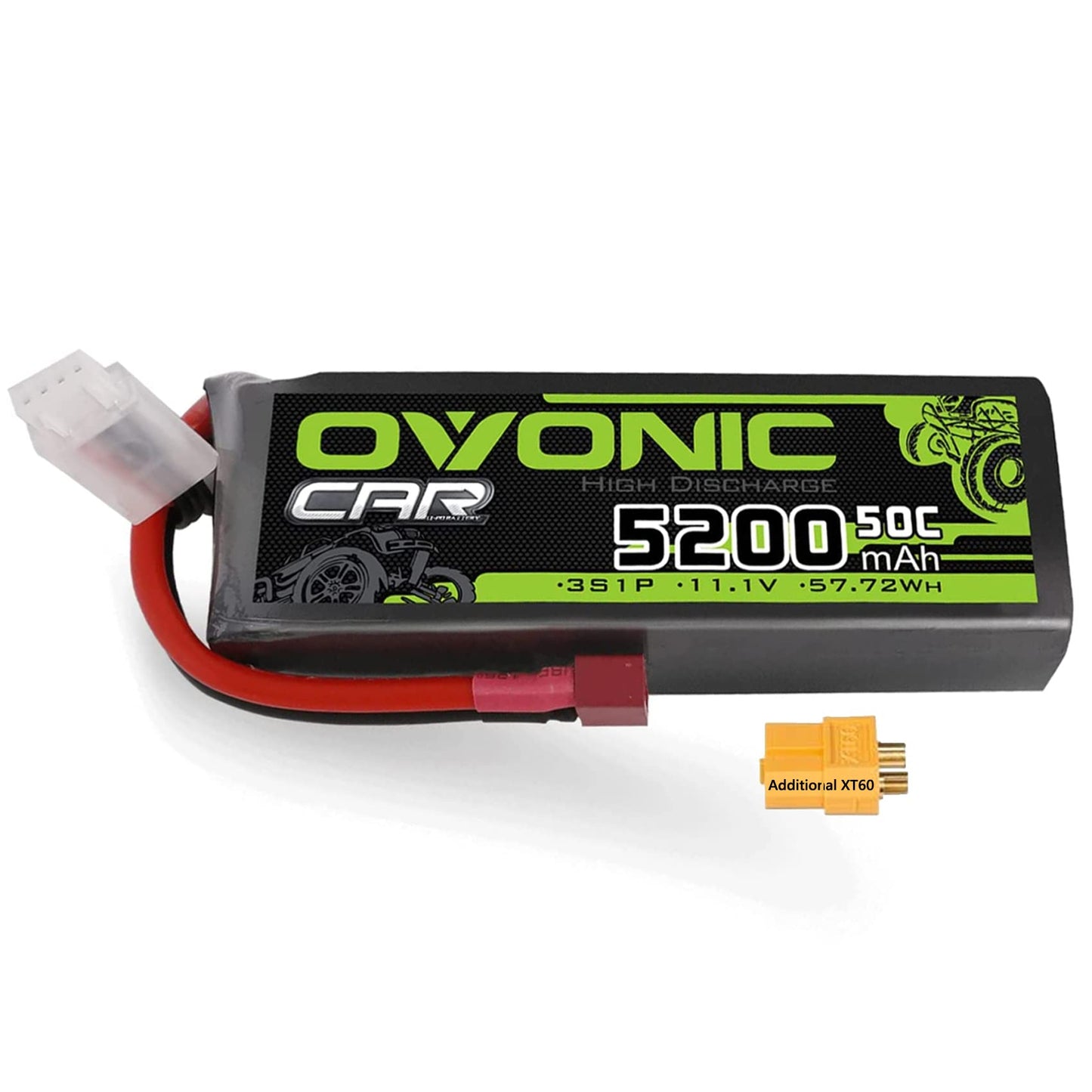
The Ovonic Lipo Battery 5200mAh 50C 11.1V 3S is a high-performance rechargeable battery designed specifically for various RC applications, including planes, quadcopters, helicopters, cars, trucks, and boats. Its robust specifications make it an excellent choice for hobbyists looking for a reliable power source.
This lithium polymer battery features a voltage of 11.1V and a capacity of 5200mAh, providing exceptional discharge rates of 50C. Constructed with premium materials, this battery ensures longevity and safety, making it suitable for both novice and experienced users. The Ovonic Lipo Battery comes equipped with Deans and XT60 connectors, ensuring compatibility with a wide range of RC devices.
Key Features:- High Capacity: 5200mAh capacity for extended run times, allowing for longer flight or drive sessions.
- Fast Discharge Rate: 50C discharge rate, delivering powerful performance during demanding situations.
- Durable Construction: Made from high-quality lithium polymer materials, ensuring safety and reliability.
- Compatible Connectors: Features both Deans and XT60 connectors for versatile use with various RC models.
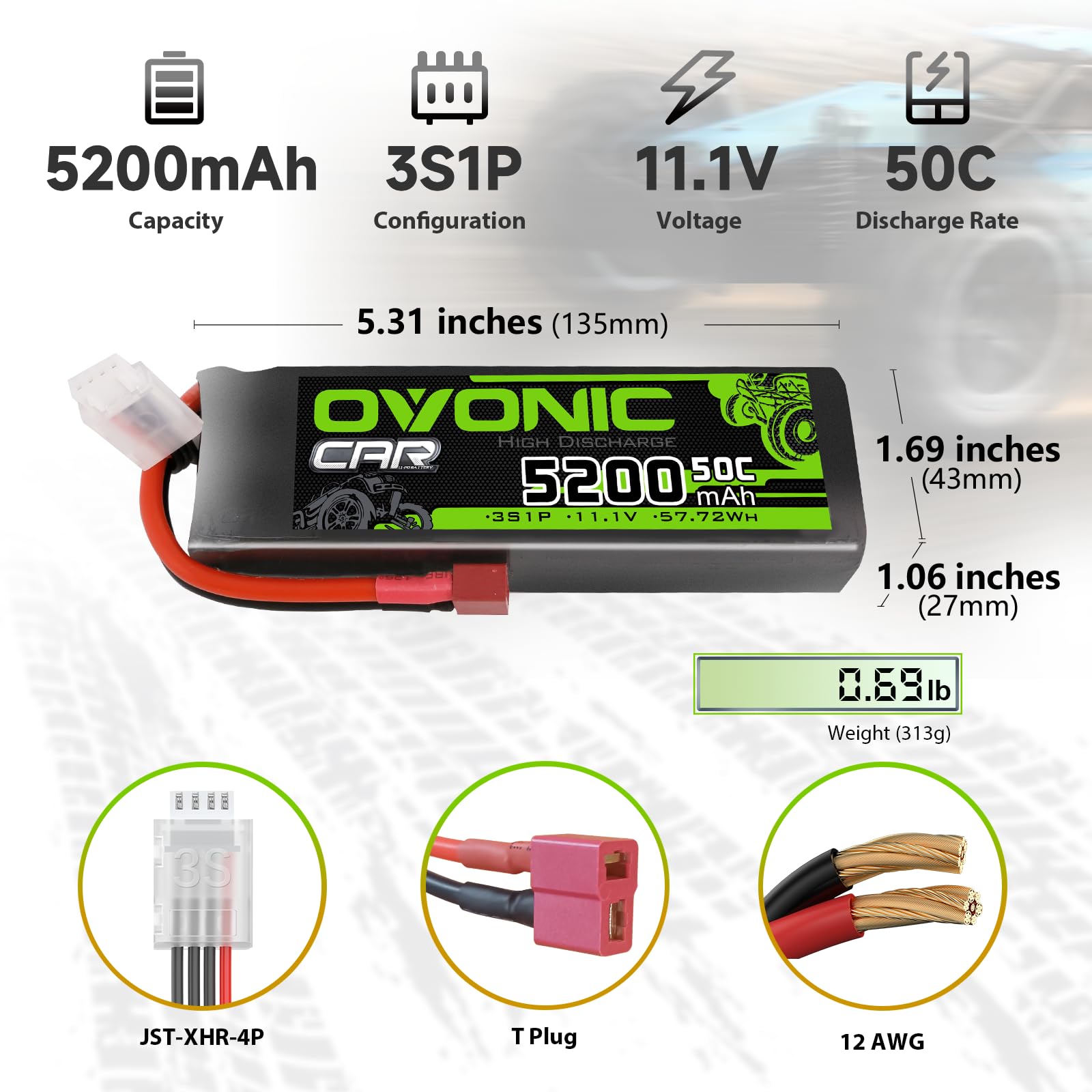
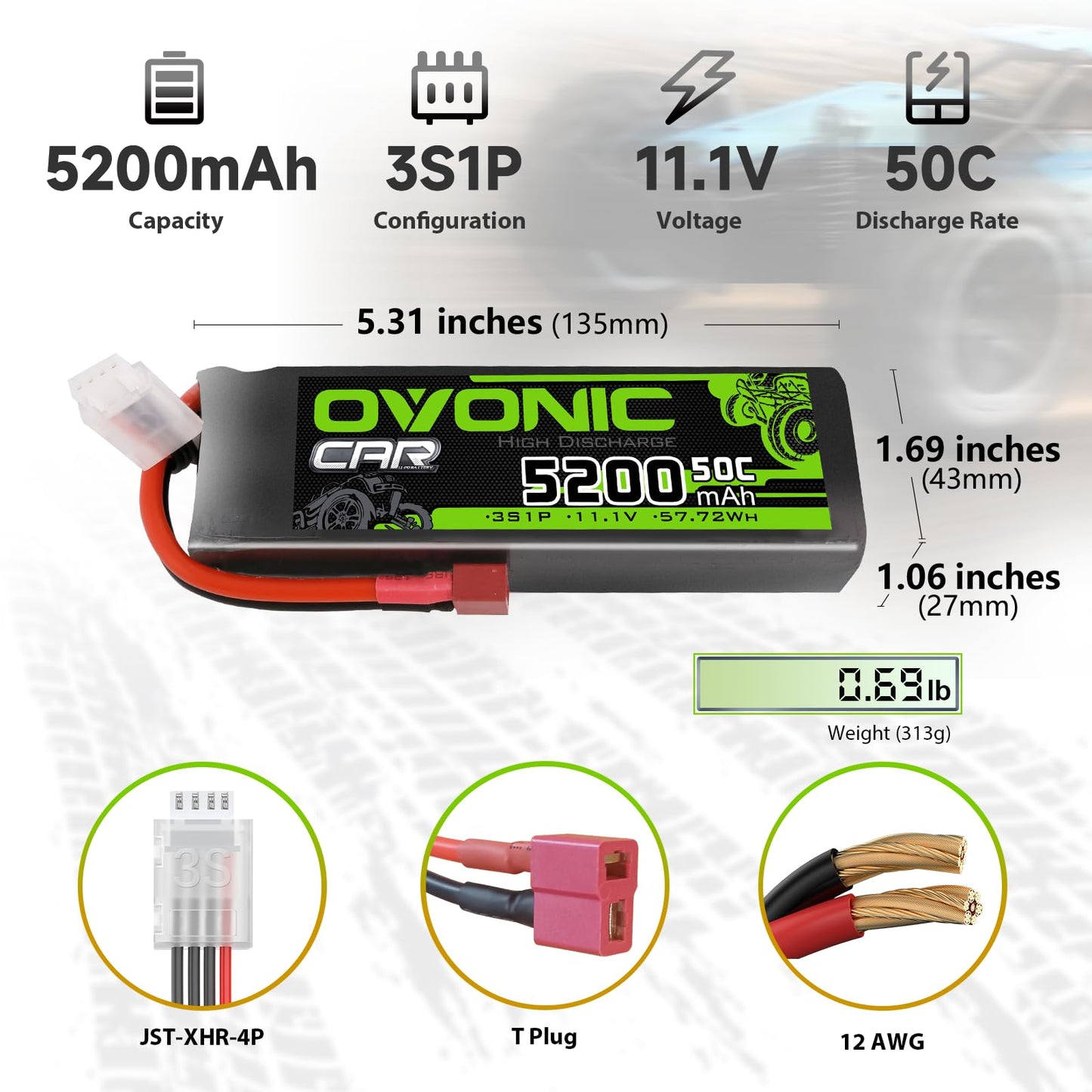
- Compact Size: Dimensions of 134x42x25mm (5.2x1.6x0.9 inches) for easy integration into your RC setups.
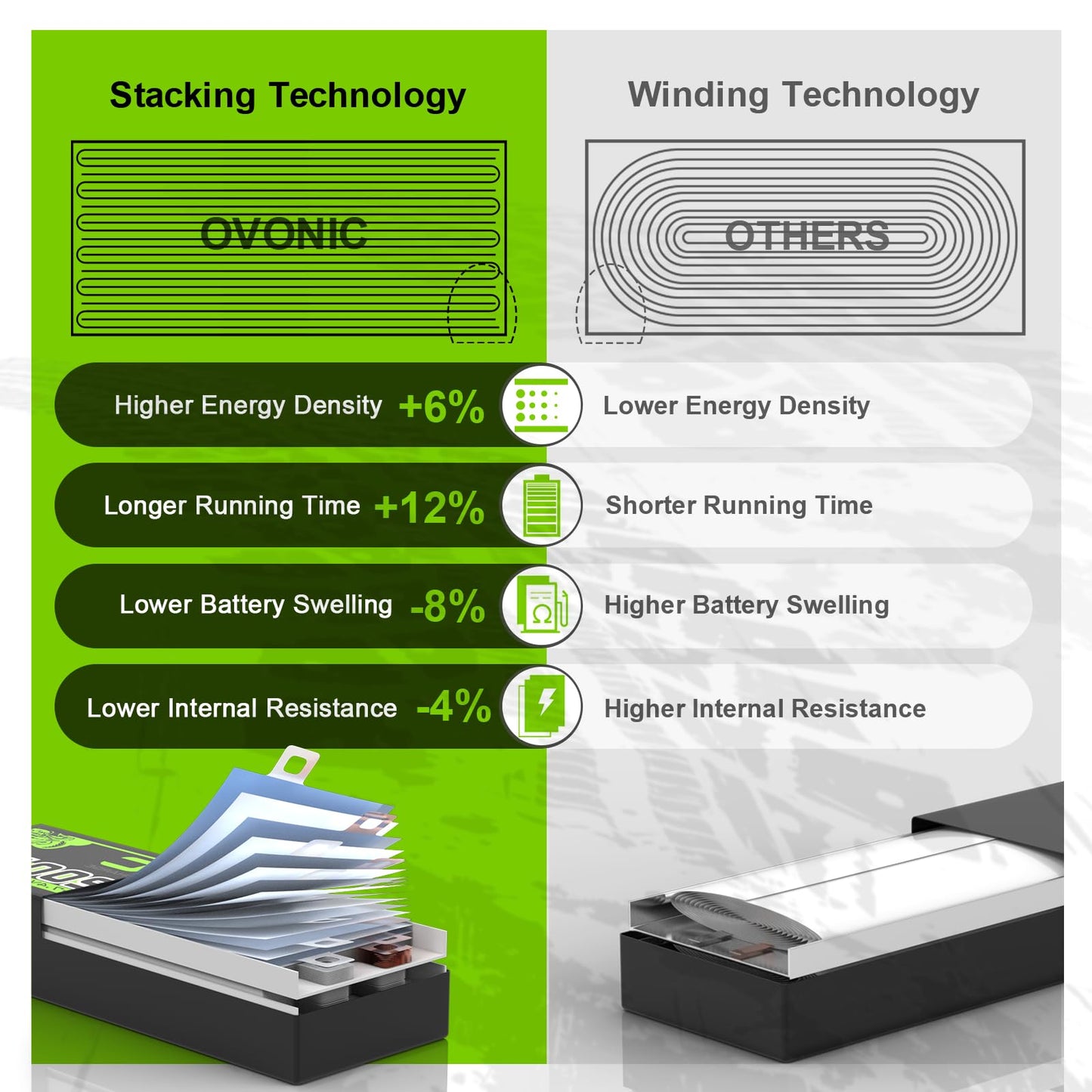
- ISO Certification: Complies with international safety standards, providing peace of mind during use.
- Comprehensive Package: Includes user manual and brand stickers, making it easy to get started.
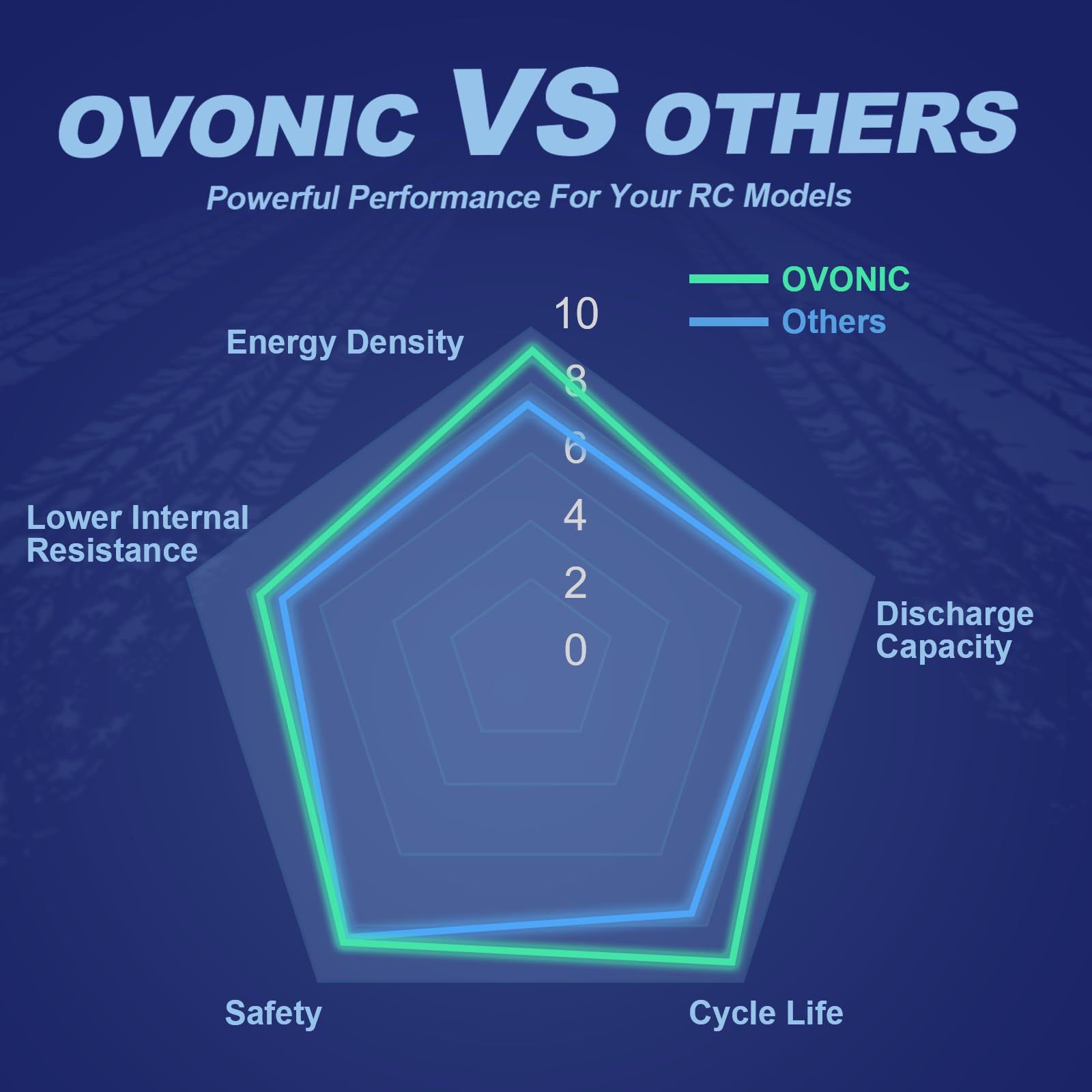
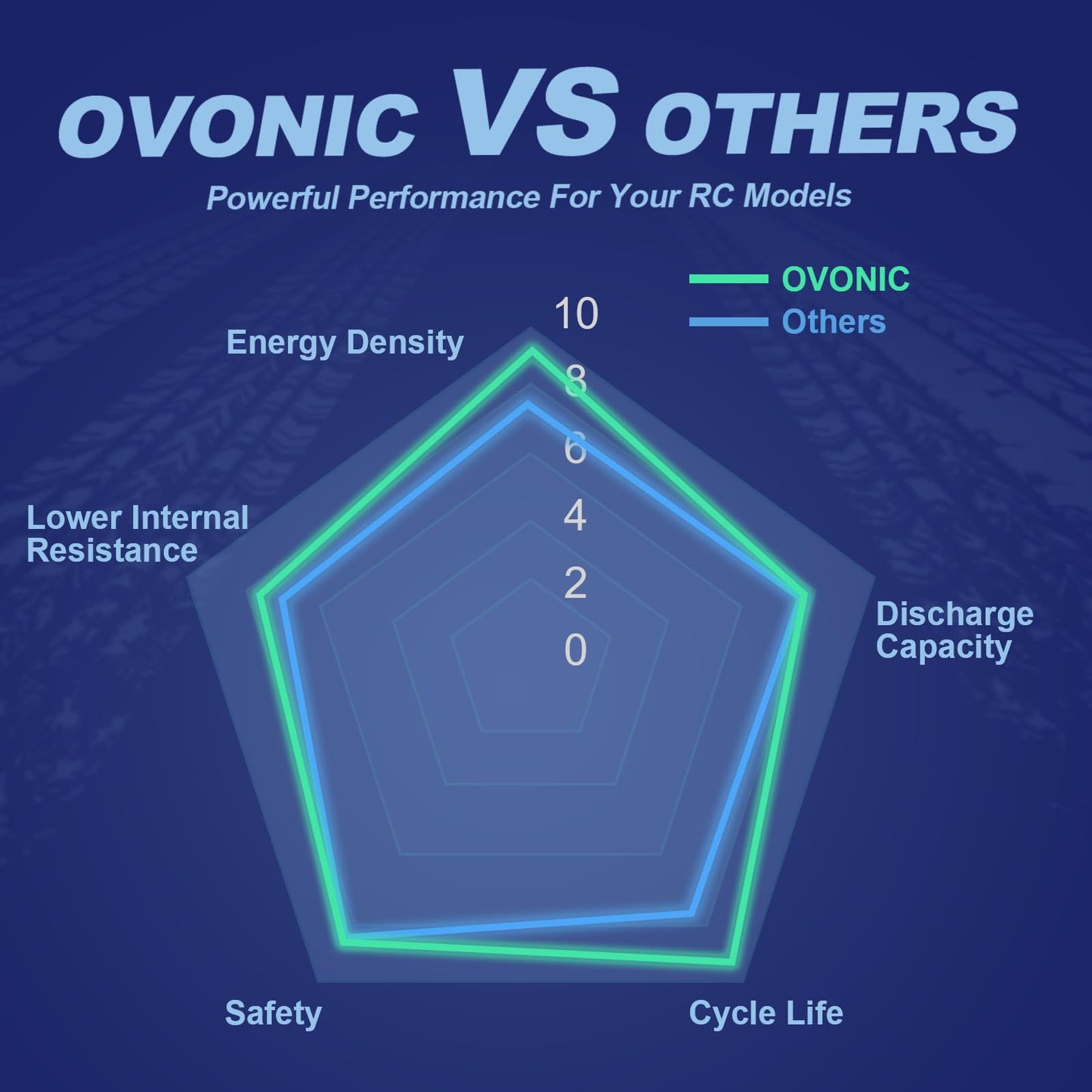
The Ovonic Lipo Battery 5200mAh 50C 11.1V 3S is ideal for RC enthusiasts looking for a battery that combines performance, safety, and reliability. Its enhanced discharge capabilities and compatibility with various RC applications make it a smart investment for those who demand high-quality power solutions. Whether you are flying a drone, racing a car, or piloting a boat, this battery offers the performance needed to elevate your experience.

Frequently Asked Questions
- Q: What are the dimensions of the OVONIC Lipo Battery? A: The dimensions are approximately five point two inches by one point six inches by zero point nine inches.
- Q: What is the capacity of the OVONIC battery? A: The capacity is five thousand two hundred milliamp hours.
- Q: What voltage does this battery operate at? A: The battery operates at eleven point one volts.
- Q: What type of connectors does the OVONIC battery have? A: The battery features a Deans T connector and a JST-XHR-4P charging plug.
- Q: What is the weight of the OVONIC Lipo Battery? A: The battery weighs approximately three hundred twelve grams.
- Q: How do I charge the OVONIC Lipo Battery? A: Use the OVONIC dedicated charger for safety and optimal performance.
- Q: Is this battery compatible with my RC helicopter? A: Yes, it is compatible with RC planes, quadcopters, helicopters, cars, trucks, and boats.
- Q: How many cells does the OVONIC Lipo Battery have? A: The battery has three cells, classifying it as a three S battery.
- Q: Can I use this battery for racing drones? A: Yes, the battery is suitable for racing drones and other high-performance RC vehicles.
- Q: What should I do if the battery is damaged during shipping? A: Contact customer support immediately for assistance with returns and replacements.
- Q: How do I maintain the OVONIC Lipo Battery? A: Store the battery in a cool, dry place and avoid extreme temperatures to prolong its life.
- Q: What is the cycle life of the OVONIC battery? A: The battery has a cycle life of approximately three hundred fifty charges.
- Q: Is the OVONIC Lipo Battery safe for beginners? A: Yes, the battery has ISO international quality certification, ensuring safer usage.
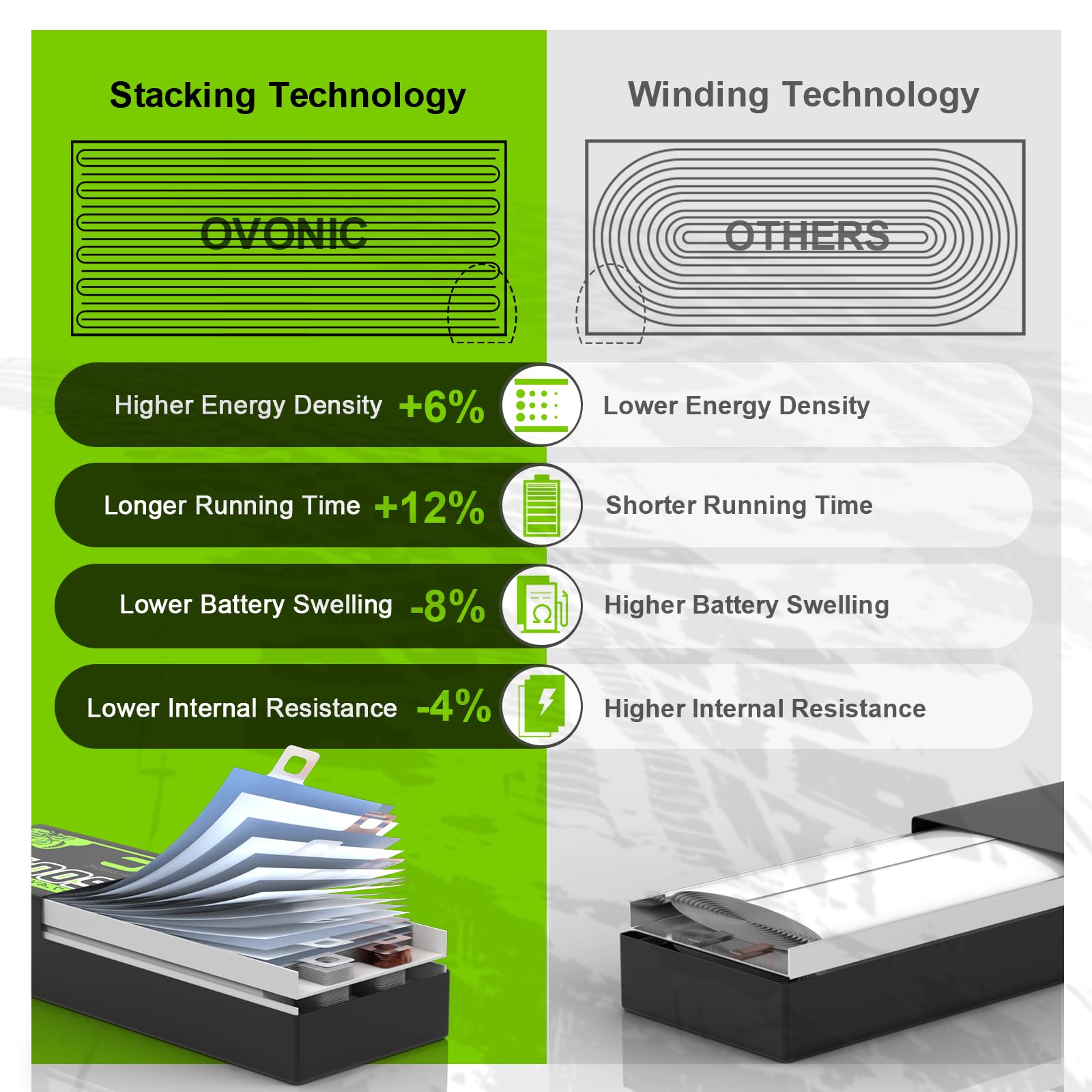
- Q: How fast does this battery charge? A: The battery charges approximately six percent faster than typical batteries.
- Q: What materials are used in the OVONIC battery? A: The battery is made from premium lithium polymer materials, specifically LiCoO2.