
You will not be allowed to compare more than 4 products at a time
View compareProfessional Shock Absorption Smart Robot Car Chassis Tank Chassis With Dc Encoder Motor For Arduino, Tracked Suspension Absorbi
Professional Shock Absorption Smart Robot Car Chassis Tank Chassis With Dc Encoder Motor For Arduino, Tracked Suspension Absorbi
Regular price
$89.39 USD
Sale price
$89.39 USD
Regular price
$127.70 USD
Unit price
per
Shipping calculated at checkout.
Hurry! Only left 5 in stock
Sold by ToyTooth — Your trusted kids' toy store.
Returns accepted within 30 days | support@toytooth.com
Shipping Information
- Shipping calculated at checkout
- Processing Time: 3–5 business days
- Estimated Delivery: 6–10 business days after dispatch
- Securely packed to ensure your purchase arrives in perfect condition
- Tracking number sent via email once dispatched
Returns & Refund
Returns accepted within 30 days of delivery.
Damaged or Defective Item
Free return shipping + replacement or full refund
Wrong Item Received
Free return shipping + replacement or full refund
Change of Mind
Return shipping at customer's expense · Item must be unused & in original packaging
All returns require a Return Authorization (RA) number before sending.
View Full Return & Refund Policy
Safety & Compliance
⚠️
California Proposition 65 Warning
Some products sold on this website may expose you to chemicals known to the State of California to cause cancer, birth defects, or other reproductive harm.
www.P65Warnings.ca.gov
🛒
General Product Safety Advisory
Always read the product label, instructions, and safety warnings before use. Do not use damaged or modified products. Store products in appropriate conditions as specified by the manufacturer.
Keep all products out of reach of children unless specifically designed for their use.
ℹ️
Product Authenticity & Notice
All products sold by ToyTooth are 100% authentic, sourced directly from trusted toy suppliers and brands. Product colors and dimensions may vary slightly from images due to screen calibration and manufacturing tolerances.
ToyTooth — Fun Toys for Every Kid, Delivered to Your Door.
Share
Couldn't load pickup availability
Guarantee safe and secure checkout
Description
Description
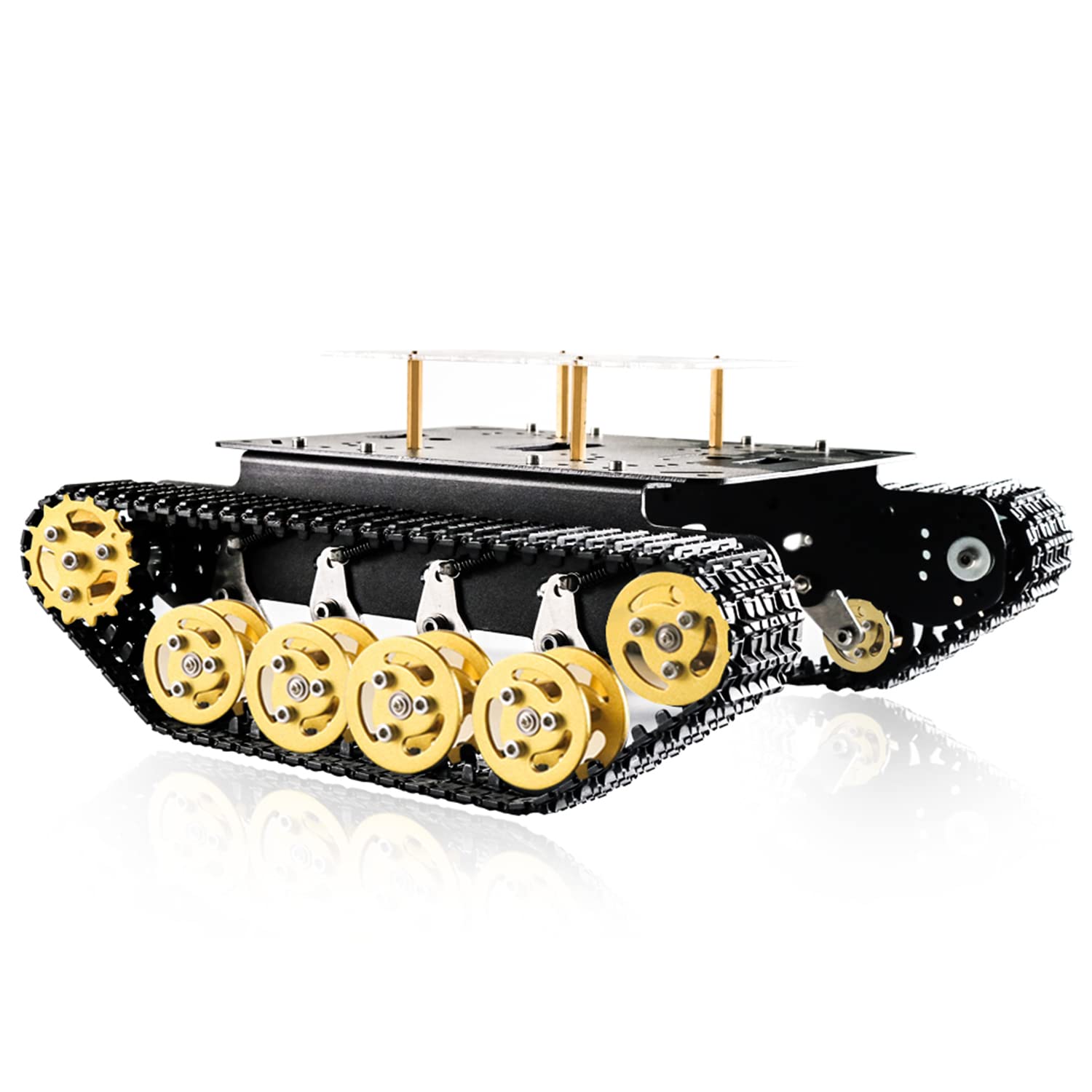
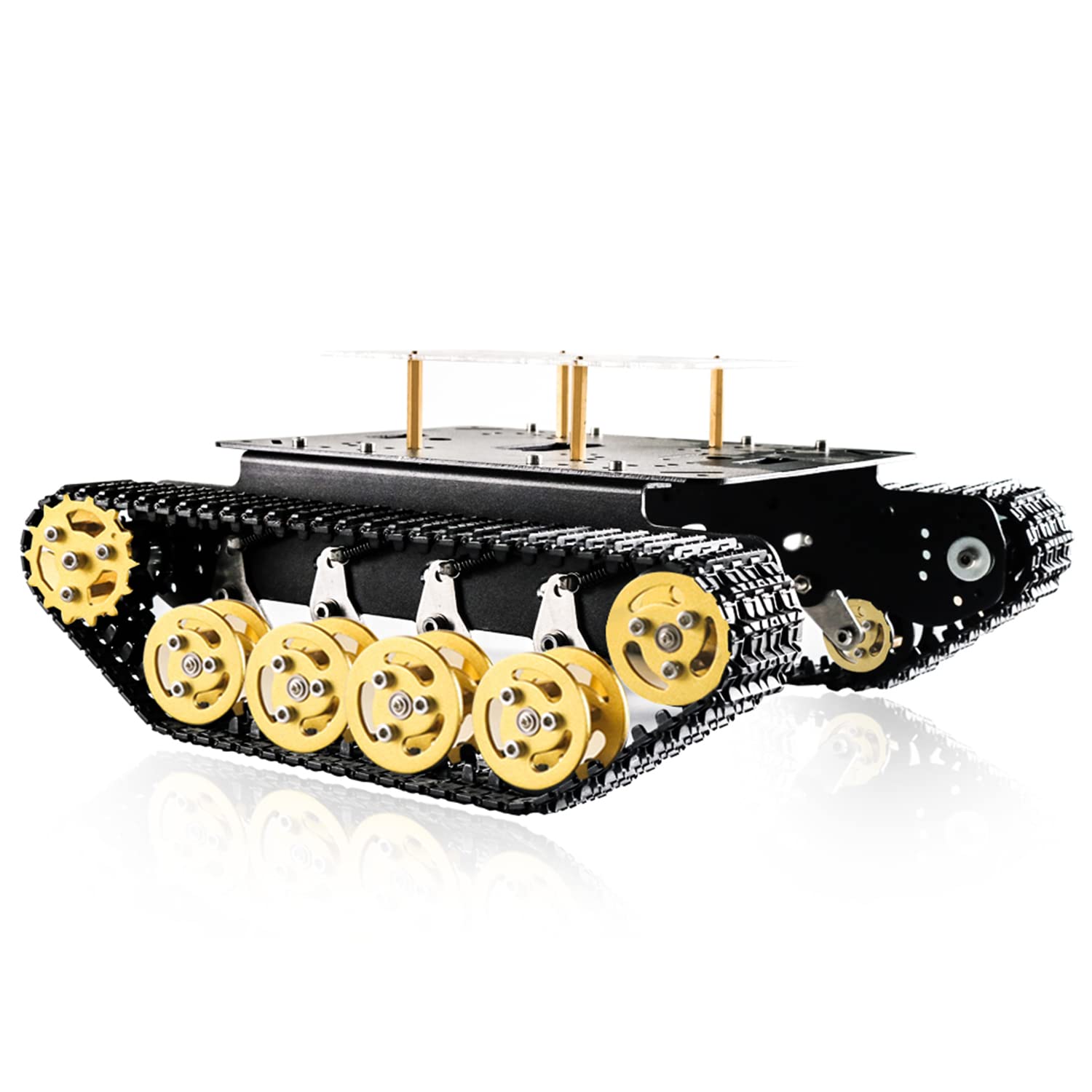
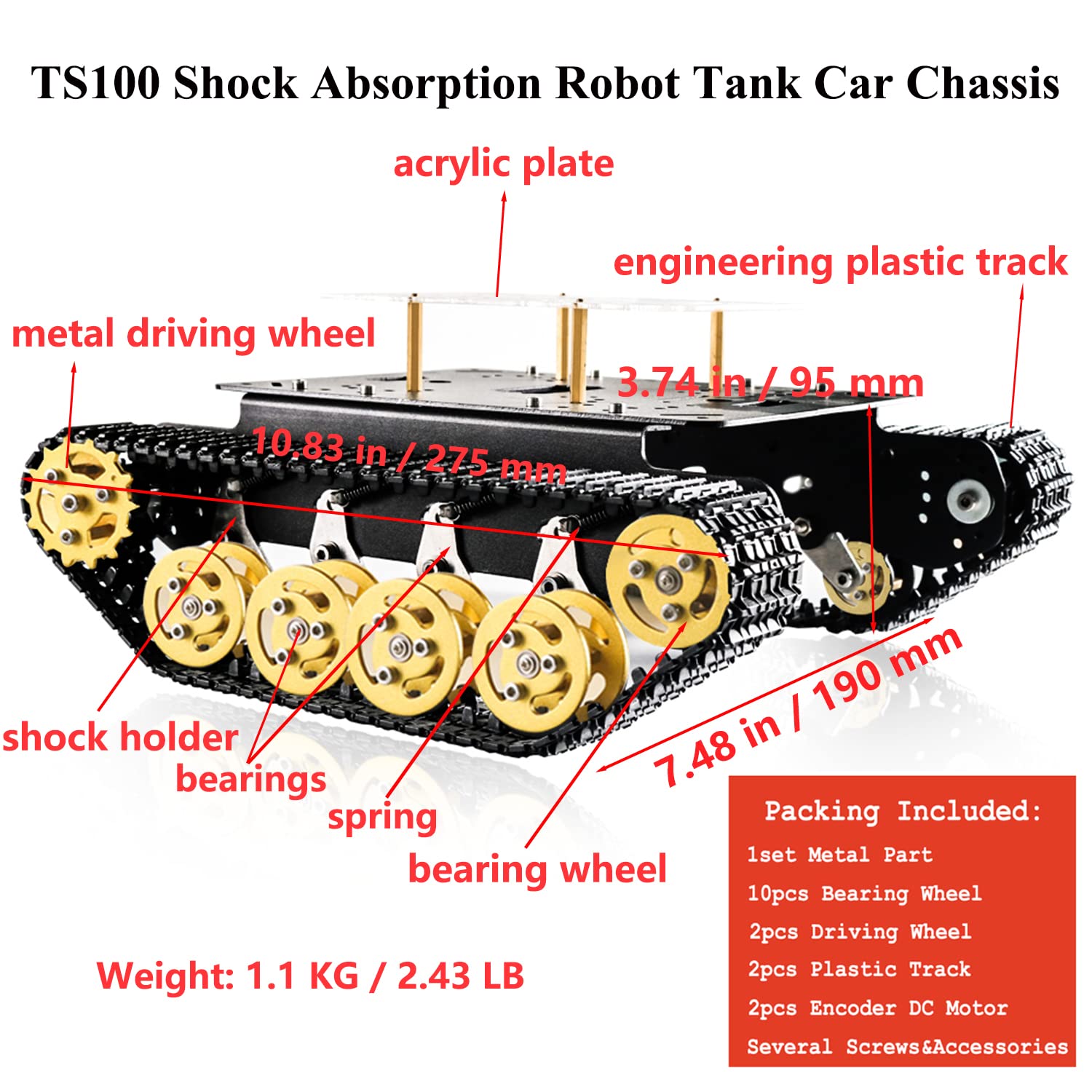
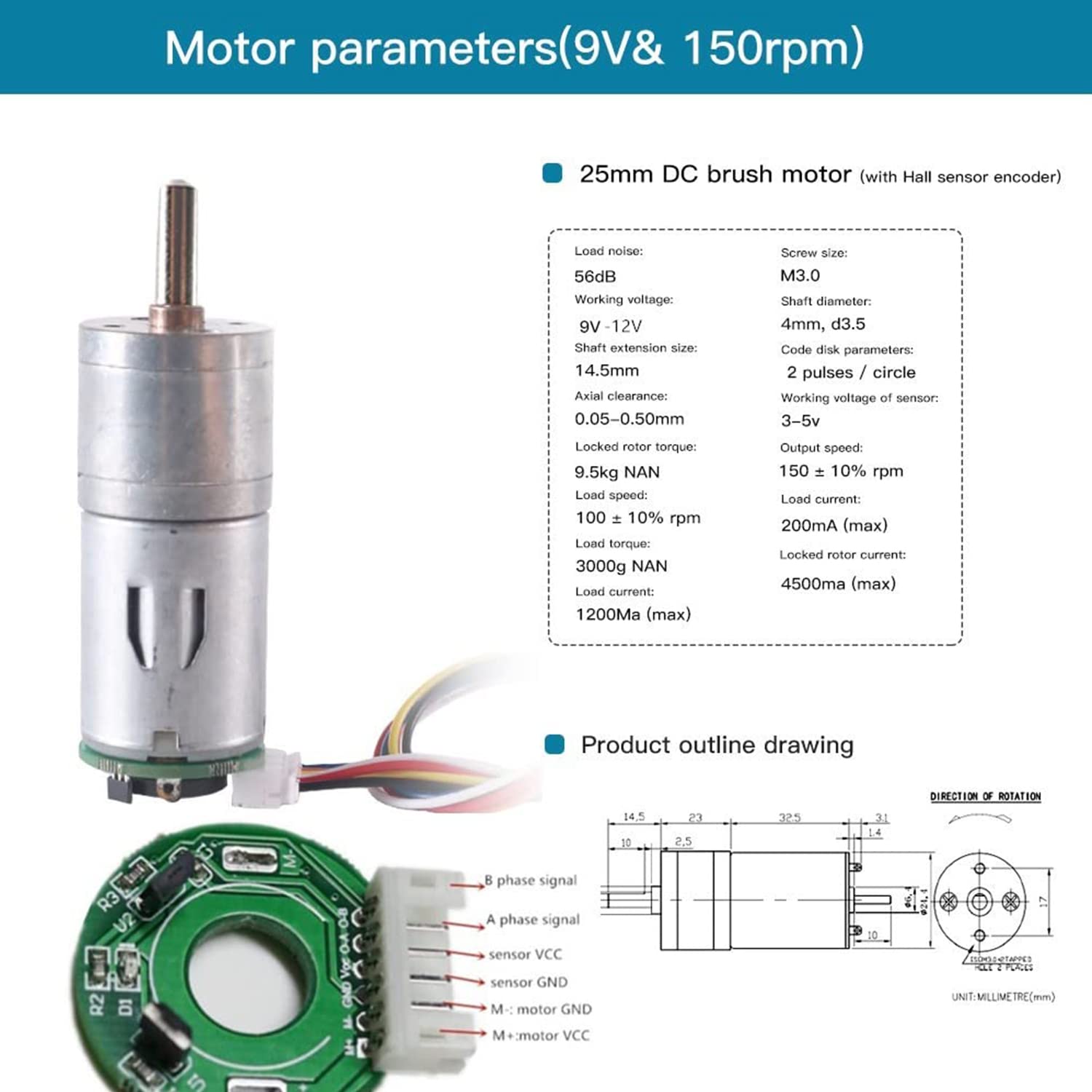
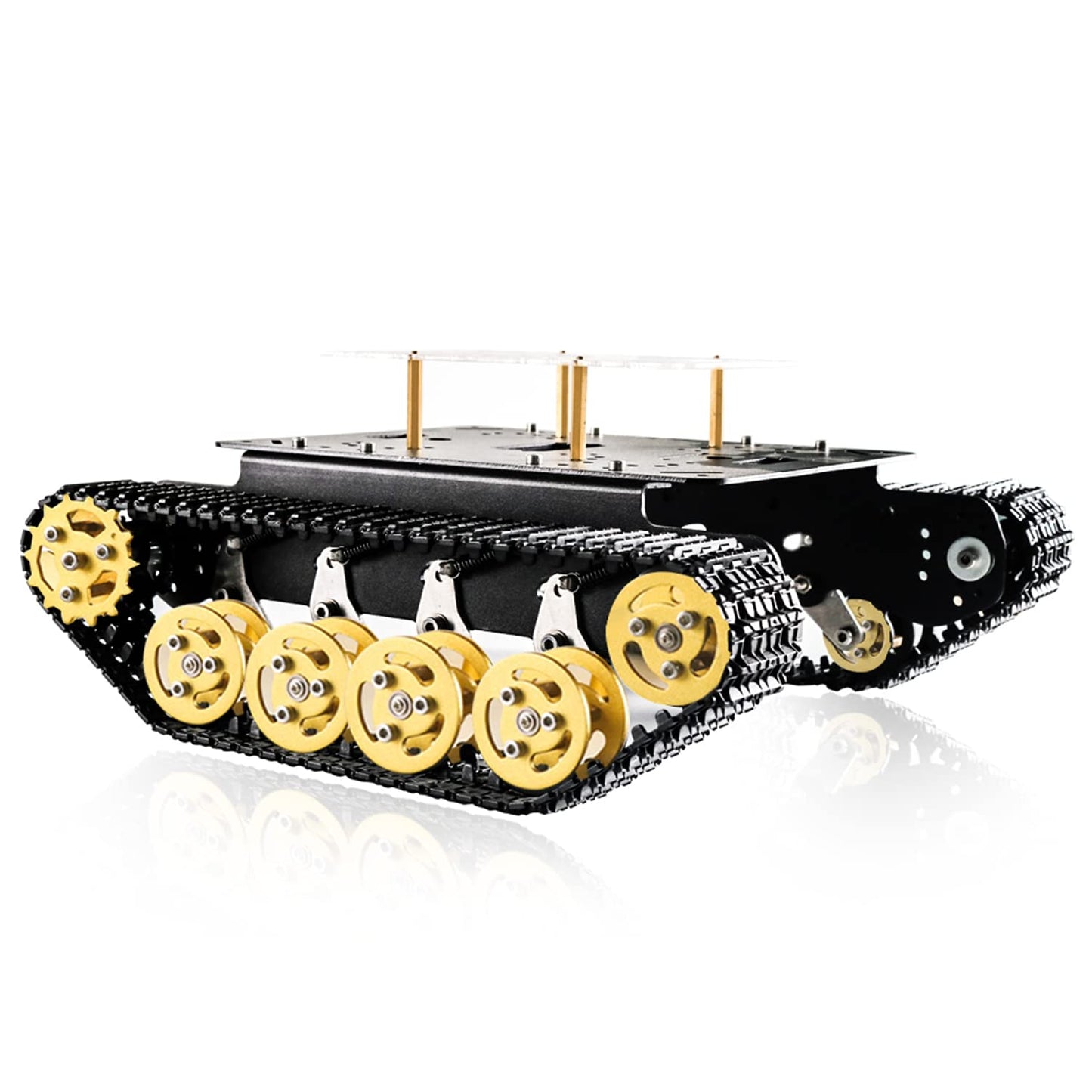
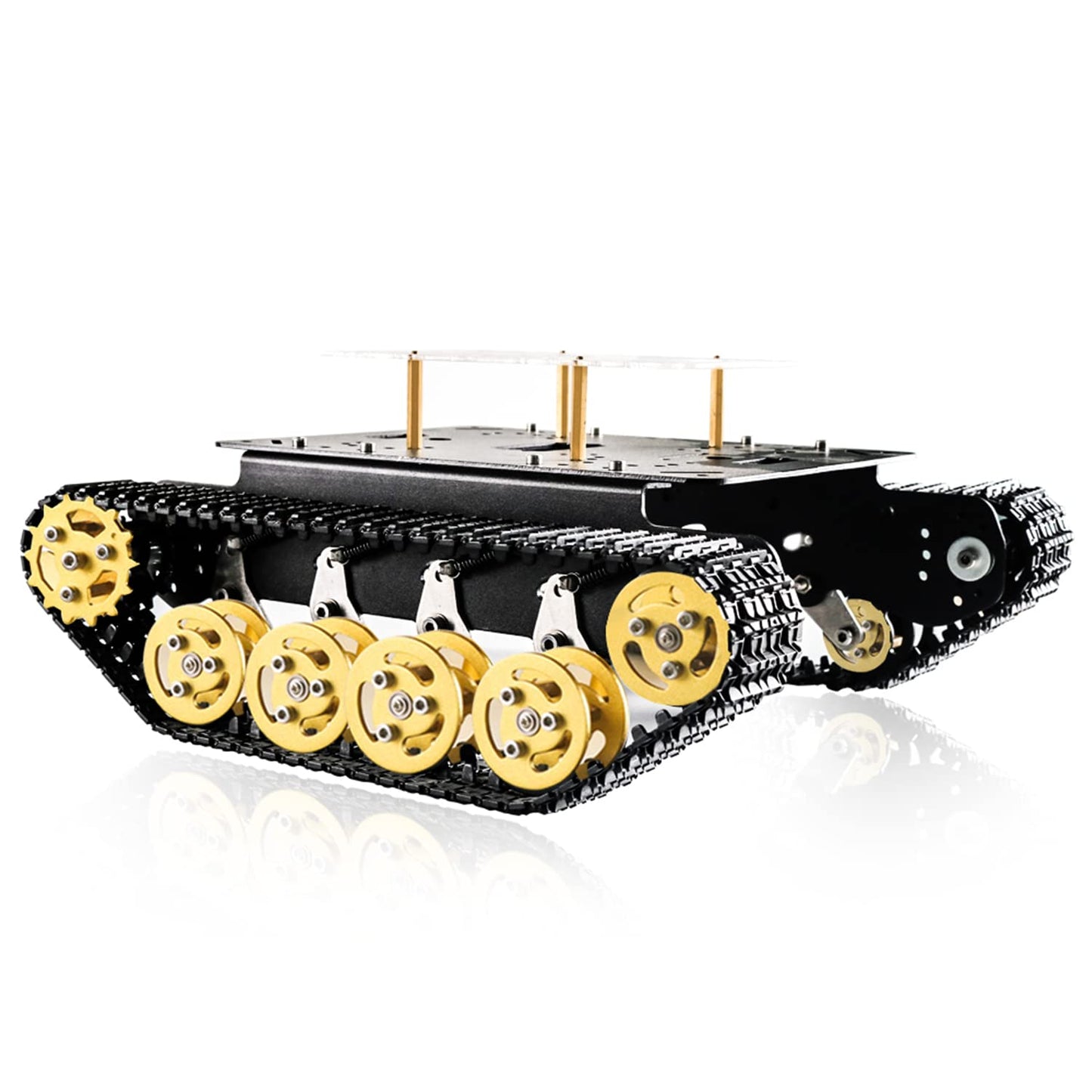
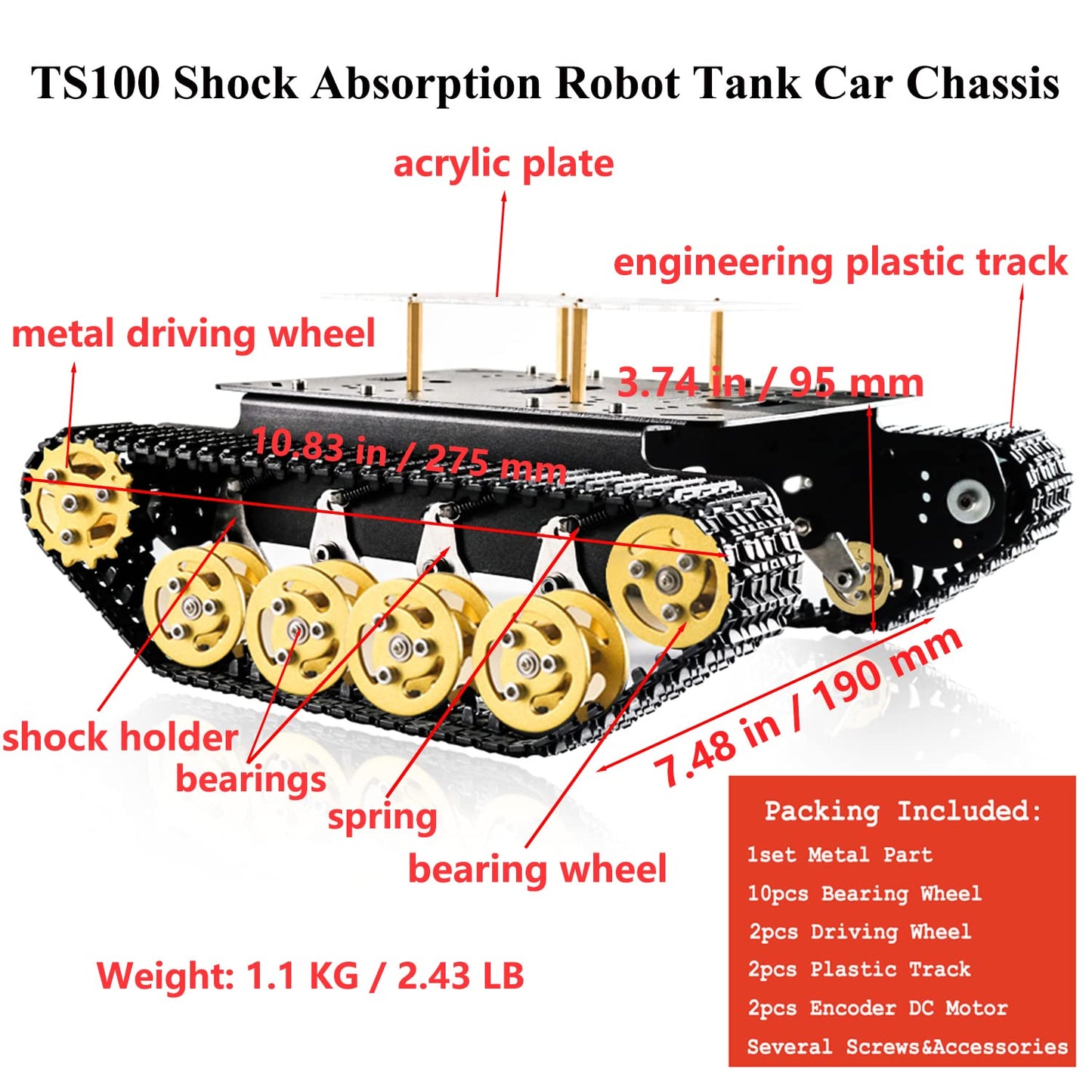
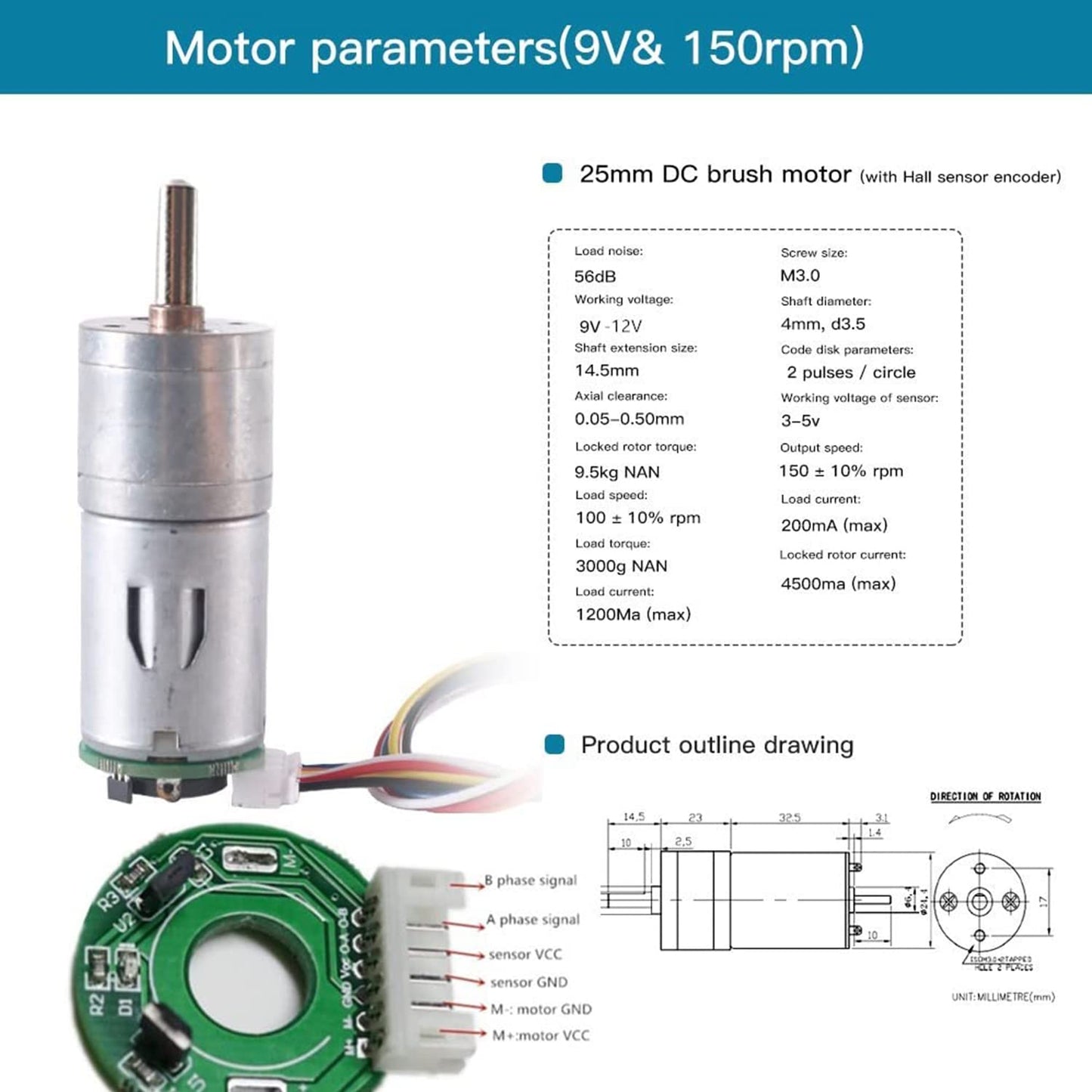
Professional Shock Absorption Metal Robot Tank Car Chassis Kit With Dc Encoder Motor For Arduino / Raspberry Pie Introduction Chassis Suspension (Suspension) System Is The General Name Of All Force Transfer Devices Between The Frame And The Axle Or Wheel. The Main Function Of Suspension Is To Transfer All Forces And Moments Between The Wheel And The Body, Such As Supporting Force, Braking Force And Driving Force, And Ease The Impact Load Transmitted To The Body From Uneven Road Surface, And Attenuate The Vibration Caused By It Ensure The Comfort Of Passengers, Reduce The Dynamic Load Of Cargo And Vehicle Itself. &Nbsp; Tank Chassis Parameters Size: 275*190*95Mm/ 10.83*7.48*3.74In (Length*Width*Height) Net Weight: About 1.1Kg/ 2.43Lb Working Voltage: 9-12V Load Weight: 3-5 Kg Material: Aluminum Alloy Track: Engineering Plastic (4.1Cm Wide, Freely Removable) Drive Wheel: Metal Bearing Wheel: Metal Independent Damping System &Nbsp; Motor Parameters Name: 25Mm Gear Motor Output Speed: 15010%Rpm No_Load Current: 200Ma (Max) Stall Current: 4500Ma(Max) Stall Torque: 9.5Kgnan Rated Speed: 10010%Rpm Rated Torque: 3000Gnan Rated Current: 1200Ma (Max) Noise: 56Db Working Voltage: 9-12V Outside Shaft Length: 14.5Mm Shaft End Play: 0.05-0.50Mm Screw Size:M3.0 Dia. Of Shaft Phi 4Mm, D3.5 Encoder: 6Pulses/Circle Working Voltage For Sensor: 3-5V &Nbsp; Shipping List Metal Part: 1Set Bearing Wheel: 10Pcs Driving Wheel: 2Pcs Plastic Track: 2Pcs Encoder Dc Motor: 2Pcs Screws Kit: 1Set Others: Several
Frequently Asked Questions
- Q: What are the dimensions of the Professional Shock Absorption Smart Robot Car Chassis? A: The dimensions are two hundred seventy-five millimeters by one hundred ninety millimeters by ninety-five millimeters.
- Q: What material is the robot chassis made from? A: The chassis is made from aluminum alloy, ensuring durability and strength.
- Q: How much does the chassis weigh? A: The net weight of the chassis is approximately one point one kilograms.
- Q: How do I power the robot chassis? A: You can power the chassis using a voltage range of nine to twelve volts.
- Q: What is the maximum load capacity of the chassis? A: The chassis can support a load weight of three to five kilograms.
- Q: How do I install the DC motor on the robot chassis? A: Follow the assembly instructions in the manual, ensuring the motor is securely attached using the provided screws.
- Q: Is this robot chassis suitable for beginners? A: Yes, it is suitable for beginners as it comes with a detailed assembly manual.
- Q: Can I use this chassis with Raspberry Pi? A: Yes, the chassis is compatible with Raspberry Pi and Arduino, allowing for versatile control options.
- Q: How should I care for the robot chassis to ensure longevity? A: Keep the chassis clean and avoid exposure to moisture to prevent rust and damage.
- Q: What should I do if the chassis arrives damaged? A: Contact customer support immediately for assistance with returns or replacements.
- Q: Can I store the chassis outdoors? A: No, it is recommended to store the chassis indoors to avoid damage from weather conditions.
- Q: How do I clean the chassis? A: Use a dry cloth to wipe off dust and ensure no moisture comes into contact with the electronic components.
- Q: Is there a warranty for the robot chassis? A: Yes, the chassis typically comes with a warranty; check the product details for specific terms.
- Q: What type of wheels does the chassis use? A: The chassis uses metal drive wheels and engineering plastic tracks for enhanced mobility.
- Q: How can I troubleshoot if the robot is not moving? A: Check the power supply and ensure all connections are secure; consult the manual for further troubleshooting steps.