

The toy sits in the corner, untouched after day three. Sound familiar? Most of the time, it's not that your kid is ungrateful or easily bored — it's that the toy didn't meet them where they actually are. A baby who isn't pulling to stand yet doesn't need a walker. A seven-year-old who's already past fidget toys needs something that holds attention for longer than thirty seconds.
Age labels on packaging are rough averages. What matters more is the developmental stage your child is in right now — what their body is learning to do, what their brain is ready to process, and what kind of play genuinely holds their interest. Here are five real picks, across different stages, with a plain-English breakdown of what each one is actually building.
1. For the Baby Starting to Find Their Feet (6–12 Months)
Around six months, babies start pushing against surfaces, bouncing, and testing what their legs can do. They're not walking yet, but they're deeply motivated to move — and that motivation is exactly what you want to channel.
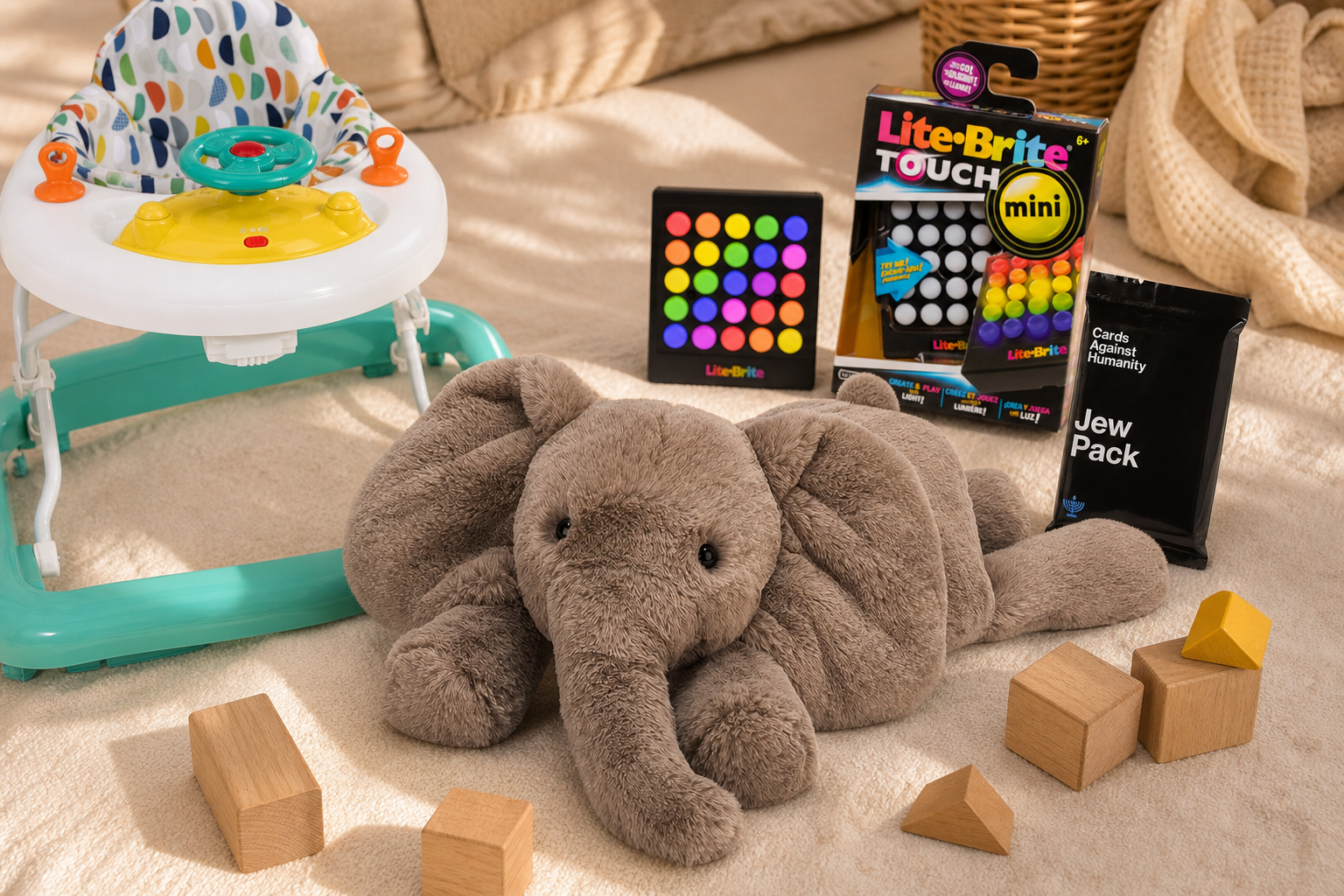
The Bright Starts Ready to Roll Walker with Lights & Sounds is built for this exact window. It has two modes — walk and explore, or sit and play — so it meets babies at both ends of the 6-to-12-month range. The removable electronic toy station (with a teal steering wheel, spinning elements, and bright buttons) keeps a younger baby engaged while seated, and the sturdy teal frame gives an older baby something to push against as they build the leg strength and balance that precede independent walking.
What it's actually training: gross motor development, cause-and-effect understanding (press a button, something happens), and spatial awareness as they navigate around furniture. Currently on sale from 116.27 down to 81.39.
2. For the Toddler Who Needs a Comfort Anchor (All Ages, Especially 1–4)
Emotional regulation is a developmental skill, not a personality trait — and young children build it partly through object attachment. A well-chosen stuffed animal isn't just a toy; it's a transitional object that helps kids self-soothe during naps, new environments, and big feelings.
The Jellycat Smudge Elephant Plush Toy is the kind of thing kids actually bond with. Its soft grey-brown fur, floppy posture, and understated design make it genuinely snuggly rather than visually overwhelming. At a sitting height of 5.1 inches, it's a manageable size for small arms. Jellycat's reputation for softness is well-earned, and this one in particular has the kind of gentle, unfussy look that tends to become a long-term favourite rather than a shelf decoration.
What it's actually building: emotional regulation, imaginative play, and the early narrative thinking that comes from giving a toy a name and a personality. Currently on sale from 102.93 down to 72.05.
3. For the School-Age Kid Building Creative Focus (Ages 6+)
Around age six, kids start to sustain attention on self-directed creative tasks — but only if the task gives them enough feedback to stay engaged. Open-ended art tools work well here, especially ones with an immediate visual payoff.
The Lite Brite Mini Touch Art Set is a compact, touchscreen-style update on the classic Lite-Brite concept. The grid of colourful light-up dots responds to touch, so kids can create glowing pixel art without pegs or templates getting in the way. At roughly 3.5 by 3 inches, it's genuinely portable — the kind of thing that travels well in a bag for a restaurant or a long car ride without taking over the table.
What it's actually training: fine motor precision, colour sequencing, spatial planning, and the ability to hold a creative intention across multiple steps — all things that feed directly into early STEM and art thinking. Currently on sale from 54.06 down to 37.84.
4. For the Older Kid (or Adult) Who Learns Through Laughter and Culture (Ages 17+)
Play doesn't stop at twelve. For teenagers and adults, games that reward cultural knowledge, wordplay, and social reading are genuinely developmental — they build the kind of lateral thinking and social calibration that formal schooling rarely teaches directly.
The Cards Against Humanity Jew Pack Mini Expansion is a 30-card expansion written by the Cards Against Humanity team, designed to add culturally specific humour to existing game nights. It's irreverent by design and rated for ages 17 and up — this one is squarely for the adults in the household, not the kids. But if your family game nights have started to feel stale, a well-chosen expansion pack is one of the cheapest ways to refresh them. Currently on sale from 19.07 down to 13.35.
What it's actually doing: reinforcing in-group cultural fluency, sharpening wit under social pressure, and — honestly — giving adults a reason to keep playing games together, which matters more than people admit.
The Honest Takeaway
Matching a toy to a developmental stage isn't about being precious or overthinking it. It's just about noticing what your child is actually working on right now — physically, emotionally, creatively — and putting something in front of them that meets that energy. A toy that's slightly ahead of where they are will frustrate them. One that's behind will bore them. The sweet spot is the one that makes them feel capable and curious at the same time.
All four picks above are in stock and on sale right now. Shop by your child's age and stage at Toytooth — every pick is available now.
Frequently Asked Questions
What's the difference between age-appropriate and developmentally appropriate when choosing a toy?
Age labels are averages based on typical developmental milestones, but every child moves at their own pace. A toy is developmentally appropriate when it matches what your specific child is physically and cognitively ready for right now — not just what the number on the box suggests. A child who isn't pulling to stand yet, for example, isn't ready to get the most out of a push walker, even if they've technically hit the listed age range.
Is a baby walker like the Bright Starts Ready to Roll safe to use?
Baby walkers are safe when used with direct adult supervision on flat, hazard-free surfaces away from stairs. The Bright Starts Ready to Roll Walker also has a sit-and-play mode, which means babies can use the toy station while seated before they're ready to push and walk. Always follow the manufacturer's guidelines and supervise use closely.
At what age do kids typically form attachments to stuffed animals?
Object attachment — where a child bonds with a specific toy or blanket for comfort — most commonly develops between around 8 months and 3 years, though it can happen earlier or later. A soft, floppy plush like the Jellycat Smudge Elephant tends to work well as a comfort object because its texture and size are easy for small children to hold and carry.
Can the Lite-Brite Touch Mini be used without supervision for younger kids?
The Lite-Brite Touch Mini is designed for ages 6 and up. For children in that range, it's generally suitable for independent play — it's compact, has no small detachable parts, and is made from durable ABS plastic. For younger children, adult supervision is recommended as with any electronic toy.

