

You know they love it. The show, the game, the film — it's basically their whole personality right now. So a collectible figure seems like a perfect gift idea. Then you open a browser tab and immediately feel lost.
Blind boxes, vinyl figures, limited editions, display-grade statues — the category has its own language, and if you're not already in it, the options blur together fast. The good news: you don't need to become a collector to buy a great gift. You just need to ask three questions in the right order.
Question 1: Which franchise do they actually love?
This sounds obvious, but it's the one people skip — and it's where most bad collectible gifts come from. A generic "gamer figure" or a character from a franchise they used to like three years ago lands flat. The right move is to get specific.
Think about what they've talked about recently. What are they playing, watching, or rewatching? What's on their phone case, their hoodie, their social media? If you're genuinely unsure, a quick scroll through their recent posts or a casual text to a mutual friend will tell you more than any gift guide.
Once you've locked in the franchise, you've already done most of the hard work. Everything else is refinement.
Question 2: Do they want it boxed or on the shelf?
Collectors fall into two distinct camps, and buying for the wrong one is a real mistake.
Boxed display collectors keep figures in their original packaging — sometimes forever. The box is part of the piece. If you've ever seen someone's shelf lined with perfectly preserved, unopened figures facing outward, that's this person. For them, condition matters enormously, and a gift that arrives with a crushed corner is genuinely upsetting.
Open shelf collectors pop everything out and arrange it. They want to see the figure, pose it, put it next to related pieces. Packaging is just something they recycle.
A quick look at how they display what they already own tells you which camp they're in. If their shelves are a mix of open figures grouped by fandom, they're open-shelf people. If you see pristine boxes lined up like books, buy accordingly and ship carefully.
Question 3: How much does character detail matter to them?
This is where style comes in — and it's more personal than most people expect.
Some collectors want hyper-accurate, screen-faithful replicas. Every seam, every weapon, every paint detail has to match the source material. These tend to be serious fans who've already thought hard about what they'd want on their shelf.
Others love stylized interpretations — figures that capture the spirit of a character in a fun, unexpected form. This is where something like the TUBBZ collectible duck line makes a lot of sense as a gift. The concept is simple: beloved characters from major franchises reimagined as rubber ducks, each one with franchise-accurate details — the right colors, the right costume elements, the right accessories — but in a format that's inherently playful and low-stakes.
A Destiny fan who'd feel overwhelmed by a high-end statue might genuinely love a Commander Zavala duck with his blue Titan armor and helmet rendered in miniature. A Resident Evil 4 fan might get a real kick out of a hooded, purple-masked Merchant duck — recognizable enough to land, quirky enough to feel like a fun find rather than a serious purchase.
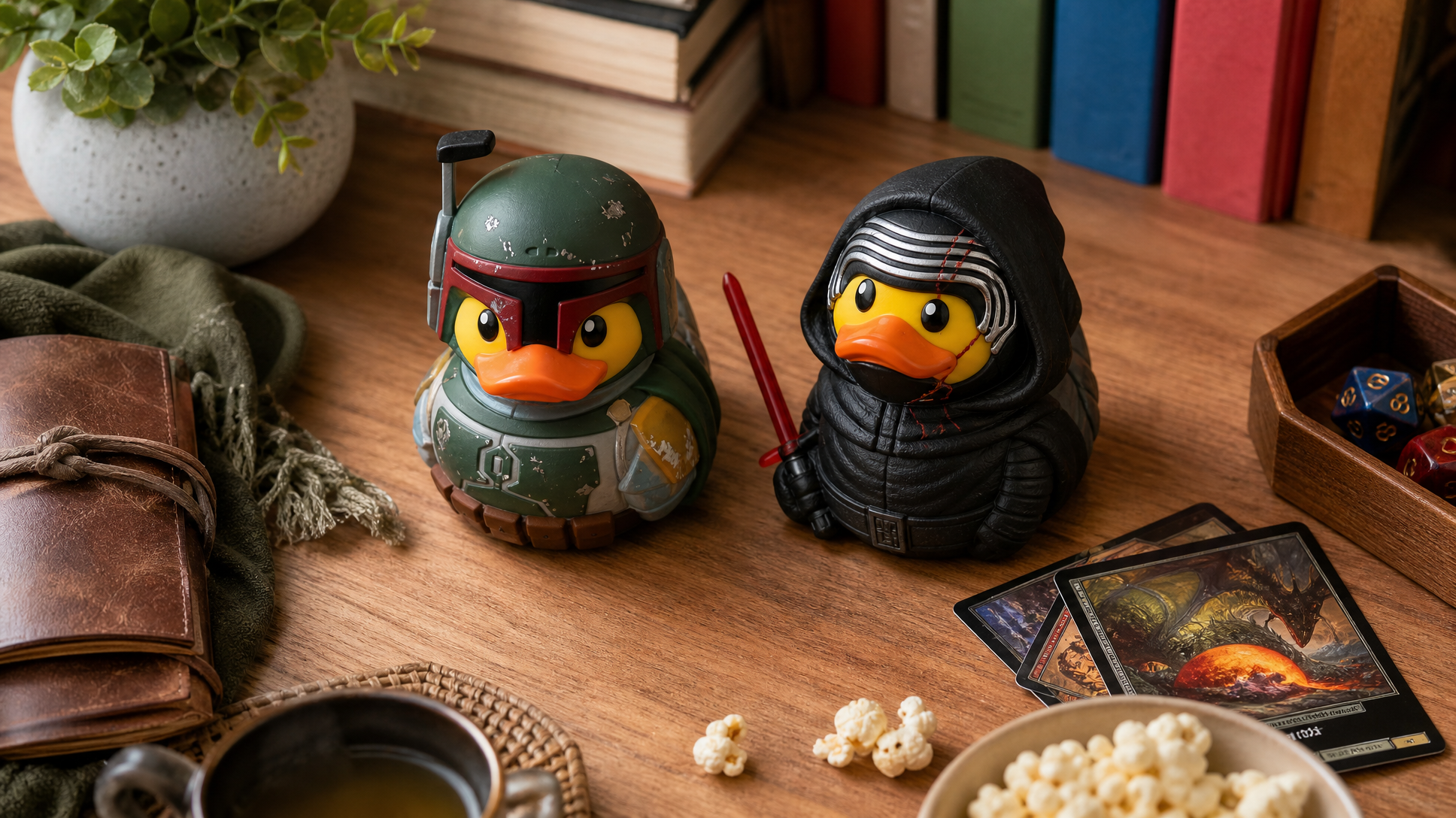
The stylized format also solves a common gift-buying anxiety: you don't have to worry about whether it's the "right" version of the character, or whether they already own the figure you're looking at. A duck version is almost always a gap in the collection.
A few practical things to check before you buy
Once you've answered the three questions, run through this quick checklist before you hit checkout:
- Is it officially licensed? Licensed figures are made with the rights holder's approval, which typically means more accurate character details and better quality control. Look for licensing language in the product description.
- Is the character someone they'd actually display? A minor background character from their favorite show might not make the cut. Stick to characters they've mentioned by name or shown specific enthusiasm for.
- Is it available? Popular figures in specific franchises sell out. If you find the right one, don't wait — collectibles at retail price disappear.
- Does the size work for their space? A large statue needs a shelf with real estate. A smaller figure or a duck-format collectible fits almost anywhere.
Why the TUBBZ line works so well for gift buyers
If you're buying for someone who collects seriously, you probably already have a specific piece in mind. But if you're buying for someone who's a big fan of a franchise without being a hardcore collector — a teen who's obsessed with a game, a friend who rewatches the same show every year — TUBBZ hits a sweet spot that's genuinely hard to find.
The figures are recognizable to anyone who knows the franchise, fun enough that non-collectors appreciate them too, and small enough to sit on a desk or a shelf without demanding a dedicated display case. They span a wide range of fandoms, so the odds that their franchise is represented are reasonable. And because the format is inherently playful, there's no pressure on the gift to be "the definitive" version of the character — it's just a delightful thing to own.
That's the kind of gift that gets displayed rather than tucked away. And for a non-collector buying for a collector, that's the real win.
Browse TUBBZ collectible ducks by franchise at Toytooth and find the character they'll actually want on their shelf.
Frequently Asked Questions
Are TUBBZ figures officially licensed?
TUBBZ figures are produced under official licensing agreements with the relevant franchise rights holders, which is what allows them to use character names, likenesses, and costume details accurately. Always check the product listing to confirm licensing for the specific character you're buying.
What's the difference between a collectible figure and a regular toy?
Collectible figures are generally designed for display rather than open play — they're made with a specific fan or collector audience in mind and often tied to licensed franchises. Regular toys are built to be handled, played with, and are typically aimed at younger children. If the recipient is a teen or adult fan, a collectible is almost always the right call over a standard toy.
How do I know if the recipient already owns the figure I'm buying?
For standard figures, there's always a risk of duplication. Stylized formats like TUBBZ ducks reduce that risk significantly — even dedicated collectors rarely own a duck version of every character they love. If you're still worried, a casual mention of "I saw something funny related to [franchise]" in conversation usually tells you what you need to know without spoiling the surprise.
Is a collectible figure an appropriate gift for a younger kid, or is it more of a teen or adult thing?
It depends on the specific figure and the child. Many collectibles are designed for teens and adults — they're display pieces, not play toys, and some have small parts that aren't safe for young children. Always check the age recommendation on the product listing. For younger kids, age-appropriate developmental toys are a safer and more suitable choice.
