

Most parents have stood in a toy aisle — or scrolled through a toy site — and noticed that the wooden, sustainably branded option costs noticeably more than the plastic equivalent. The question that follows is fair: is there a real difference, or is this mostly marketing?
The honest answer is: sometimes genuinely yes, sometimes not as much as the price suggests. Knowing which is which saves you money and helps you spend it better when it matters.
Start With the Materials — Because That's Where Most of the Gap Lives
Conventional toy brands build the majority of their products from ABS plastic, PVC, or similar petroleum-derived materials. These are durable in the short term, cheap to mold at scale, and easy to paint in vivid colors — which is why they've dominated toy manufacturing for decades. The downside is that most plastic toys aren't recyclable through standard curbside programs, and when they break (and they do break), they go straight to landfill.
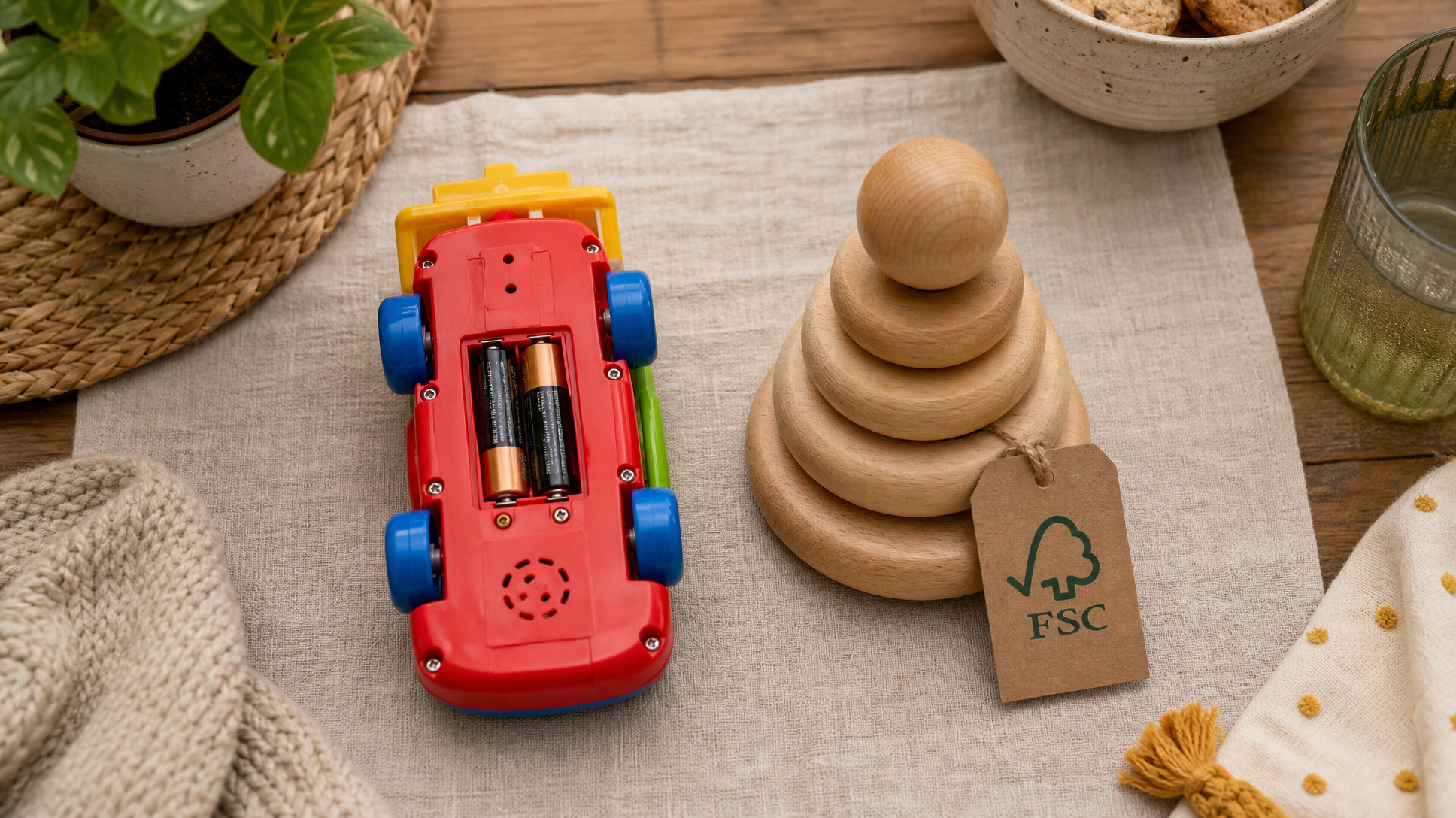
Genuinely sustainable toy companies lean on materials with a lower environmental footprint: sustainably harvested wood, natural rubber, organic cotton, and water-based paints and stains. The EPA notes that wood products from responsibly managed forests can store carbon and are biodegradable at end of life — a meaningful contrast to plastic. The key word is responsibly managed. Look for third-party certifications like FSC (Forest Stewardship Council) on wooden toys, rather than taking a brand's word for it.
One thing worth knowing: not every wooden toy is automatically sustainable. Wood sourced from poorly managed forests, finished with solvent-based paints, or shipped with excessive plastic packaging can offset a lot of the environmental benefit. The material is a starting point, not the whole story.
Packaging: The Easiest Place to Spot the Difference
Packaging is where sustainable brands tend to be most visibly different — and where conventional brands are, frankly, the worst. A typical mass-market toy arrives in a mix of cardboard, twist ties, plastic clamshells, and molded styrofoam inserts. Most of that is single-use and goes in the trash before the kid has even touched the toy.
Eco-conscious brands generally ship in minimal, recyclable, or compostable packaging. Some use unbleached cardboard, paper tape, and soy-based inks. It's a smaller detail, but across thousands of purchases it adds up — and it's also a reliable signal that a brand is thinking beyond the product itself.
If a brand claims sustainable packaging but the toy arrives wrapped in layers of plastic, that's worth noting.
Product Lifespan and Repairability — The Part Nobody Talks About Enough
Here's where the comparison gets interesting, and where the value case for sustainable toys is actually strongest.
Conventional plastic toys are designed and priced for a single child, a single season. A battery-powered vehicle that breaks at eighteen months doesn't get repaired — replacement parts aren't sold, and the repair cost would exceed what the toy cost to begin with. It's a disposable model dressed up as a product.
Well-made wooden toys operate on a different logic. A solid hardwood puzzle or stacking toy can survive two or three kids, be passed to a younger sibling, or donated in genuinely good condition years later. That extended lifespan changes the real cost-per-use math significantly. A toy that lasts five years and costs more upfront is often cheaper than replacing a cheaper plastic version twice.
Repairability matters here too. Some sustainable toy companies sell replacement parts, offer repair guides, or build products simple enough that a loose joint or a missing piece can actually be fixed. That's a design philosophy, not just a material choice.
What "Eco-Friendly" Labels Actually Mean (and Don't)
The term "eco-friendly" has no regulated legal definition in the toy industry, which means any brand can print it on a box. The same goes for "natural," "green," and "non-toxic" — all meaningful in theory, all unpoliced in practice.
The signals that actually carry weight:
- FSC certification on wood products — confirms the wood came from a responsibly managed forest.
- ASTM F963 compliance — the U.S. toy safety standard, which covers things like paint lead content. Conventional and sustainable brands alike should meet this; it's a floor, not a differentiator, but it matters. See ASTM for the standard details.
- CPSC compliance — the Consumer Product Safety Commission sets federal safety requirements for children's products sold in the U.S.
- Specific material disclosures — a brand that tells you exactly what wood species, finish, or dye they use is more trustworthy than one that just says "natural materials."
Vague claims with no certification behind them are a yellow flag. Honest brands tend to be specific.
Price Difference: When It's Worth It, When It Isn't
Not every purchase needs to be a sustainable one — that's an honest take. A foam pool noodle or a set of sidewalk chalk doesn't carry the same calculus as a toy a child will use daily for three years. The categories where the sustainable premium tends to pay off are the ones where durability and longevity matter most: building sets, puzzles, open-ended play toys, and foundational learning tools that a child will return to again and again.
For single-use or highly seasonal items — a Halloween costume accessory, a pool float — the environmental math is murkier and the premium harder to justify.
The other factor: open-ended play value. The best wooden and sustainable toys tend to be simpler by design, which often means they grow with the child. A set of wooden blocks doesn't have a single "correct" use that a toddler ages out of. That flexibility is worth something, and it's not a coincidence that the most durable toys are also often the most open-ended.
The Bottom Line
A genuinely sustainable toy company differs from a conventional one in ways that go well past the material: it's the packaging, the repairability, the certifications, the design philosophy, and the expected lifespan of the product. Not every brand that uses the word "eco" earns it — but the ones that do tend to be specific, certifiable, and built around products that last.
If you're shopping with both development and sustainability in mind, baby and toddler toys and arts and crafts are two categories where thoughtful material choices make a real difference in a child's daily play. Explore wooden and sustainably minded toys at toytooth.com — browse by age and category to find options that fit both your child's stage and your values.
Frequently Asked Questions
Are wooden toys always safer than plastic toys for young children?
Not automatically. The safety of any toy depends on the finish used, the size of parts (choking hazard risk), and whether it meets U.S. safety standards like ASTM F963. A well-made plastic toy that's CPSC-compliant can be just as safe as a wooden one. What wooden toys often avoid is certain chemical concerns associated with low-quality plastics — but the key is checking for third-party safety compliance, not just the material.
What does FSC certification mean on a wooden toy?
FSC stands for Forest Stewardship Council, an independent organization that certifies wood products sourced from responsibly managed forests. When a toy carries an FSC label, it means the wood was harvested in a way that's tracked for environmental and social standards — not just claimed to be sustainable by the brand itself. It's one of the more reliable third-party signals in the eco-toy space.
How do I know if an "eco-friendly" toy claim is genuine or just marketing?
Look for specifics rather than adjectives. Honest brands name the certification (FSC, ASTM, CPSC), disclose the materials (e.g., "rubberwood with water-based paint"), and describe their packaging practices. If a brand's eco claim amounts to "natural and green" with nothing else behind it, treat that as a marketing choice rather than a verified commitment. Third-party certifications are the most reliable shortcut.
Is it worth paying more for sustainable toys if my child will outgrow them quickly?
It depends on the toy type. For open-ended, foundational toys — building blocks, puzzles, art supplies, stacking toys — the durability of a well-made sustainable option often justifies the higher price because the toy can be passed to younger siblings or donated in good condition. For highly age-specific or seasonal items, the premium is harder to justify. Focus the sustainable spend on the toys your child will use most, and most often.

