

You've probably gone down the Pinterest rabbit hole at least once: sensory bins filled with kinetic sand, DIY fidget pouches, homemade discovery bottles. Some of those ideas are genuinely great. Others look magical in a 15-second video and then fall apart — literally — on a Tuesday morning when your toddler is already in a mood.
This guide isn't here to talk you out of DIY. It's here to help you spend your time on the projects that actually work and skip the ones that will frustrate you both.
The DIY Wins: Sensory Experiences That Are Easy to Pull Off at Home
Sensory Bins
A sensory bin is probably the most legitimate DIY in this category, and for good reason. All you need is a plastic storage tub and a filler — dried rice, dried pasta, kinetic sand from a craft store, water beads, or even crumpled paper. Toss in some scoops, cups, and small figurines, and you have an open-ended sensory activity that can be refreshed weekly for almost nothing. The "toy" here is really the experience of digging and pouring, and a bin you make yourself works just as well as anything you'd buy.
One honest caveat: water beads are a popular filler, but they pose a serious ingestion risk for children under three. If your child still mouths objects, skip them entirely. Dried rice or pasta is a much safer call for that age group.
Textured Sensory Bags
A zip-lock freezer bag filled with hair gel and small plastic toys, sealed with strong tape along the zip, makes a surprisingly effective sensory squish toy for babies and young toddlers. They can push the objects around through the bag without accessing them. The key is using a heavy-duty freezer bag (not a sandwich bag), double-sealing it, and supervising closely. This one's genuinely worth making — it costs almost nothing and holds up reasonably well for supervised play.
Simple Texture Boards
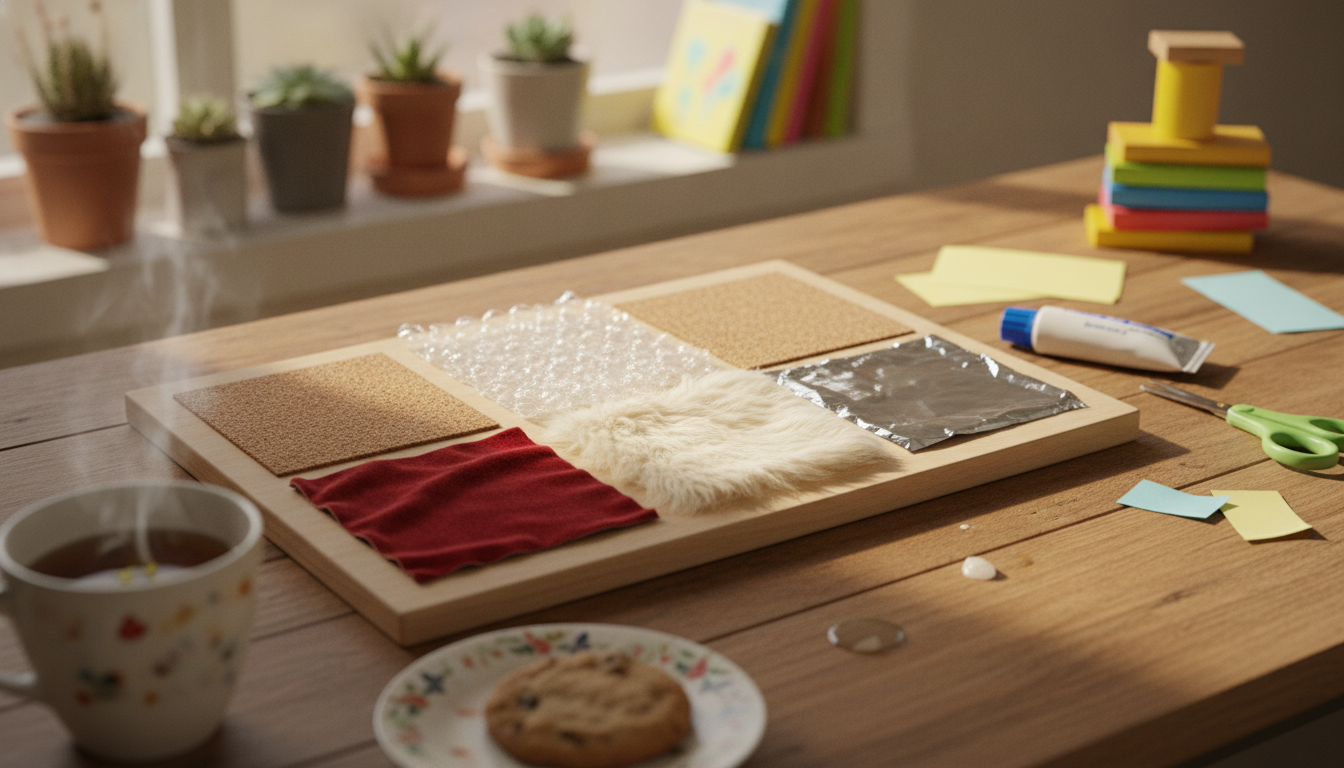
Glue swatches of different materials — velvet, sandpaper, bubble wrap, faux fur, cork — onto a piece of cardboard or a wooden board. That's it. For babies and young toddlers who are exploring tactile differences, a homemade texture board does exactly what a purchased one does. The limitation is durability: a store-bought version will last years; yours might last a season. But if you're testing whether your child is even interested in this kind of play, making one first is a smart move.
Where DIY Starts to Fall Short
Anything That Needs Consistent Resistance
Fidget toys, squeeze balls, and resistance-based sensory tools work because they provide a predictable, consistent amount of push-back. That's what makes them calming or regulating for kids who seek that kind of input. When you make a stress ball at home — a balloon filled with flour or playdough — the resistance changes as it dries out, stretches, or starts to leak. A child who relies on that tactile input for focus or self-regulation notices the inconsistency, even if they can't articulate it.
For casual play, a homemade squeeze ball is fine. For a child who genuinely uses sensory tools as part of their daily routine, a purpose-made product is worth it.
Developmental Toys That Require Precise Sizing
Stacking rings, shape sorters, peg puzzles — these look simple, but the sizing is deliberate. The gaps, the weight of each piece, the way a ring slides onto a post: all of that is calibrated for the developmental stage the toy targets. A homemade version almost always has tolerances that are slightly off, which means the toy either frustrates the child (pieces don't fit) or gives them no challenge at all (pieces are too loose). This is one category where buying is genuinely the better call, especially for children under two.
Anything That Goes in the Mouth
Teething toys, chewable sensory tools, and anything designed for oral sensory input need to meet Consumer Product Safety Commission standards for materials and small-parts testing. There's no reliable way to replicate that at home. If your baby or toddler is in an oral sensory phase, buy a product that's been tested for it — it's one of the few places where the safety standard genuinely matters more than the cost savings.
Outdoor Sensory Play Equipment
Sand tables, water play stations, balance boards — these need to handle weather, weight, and repeated rough use. A DIY version can work for a season, but if your child is going to use it daily, the structural integrity of a purpose-built product is hard to match without real woodworking skills and the right materials. Eco-friendly wooden toys in particular are made to specific thickness and joinery standards that keep them safe under the kind of stress kids actually apply.
A Practical Framework for Deciding
Before you start hot-gluing anything, run it through three quick questions:
- Is the experience the point, or is the object the point? If the sensory value comes from the activity (digging, pouring, squishing), DIY usually works. If the value comes from the object itself (its weight, its resistance, its precise fit), buy it.
- Will it go in their mouth? If yes, buy it.
- Does it need to last? A one-afternoon sensory bin is worth making. A toy your child will use every day for two years is worth buying.
Getting the Most Out of Both
The smartest approach most parents land on is a mix: DIY for open-ended sensory experiences that are easy to refresh and customize (bins, texture boards, sensory bags), and buy for anything that needs to be durable, safe for mouthing, or developmentally precise. That way you're not spending money on things a plastic tub and some dried lentils can handle, and you're not spending an afternoon trying to engineer something that a well-made toy already does better.
If you're building out a sensory toy setup — whether for a baby just starting to explore textures or a preschooler who needs more structured sensory input — it helps to shop by age and developmental stage rather than just by category. That's where the right product for the right moment becomes obvious.
Browse ready-made sensory and developmental toys organized by age at Toytooth — it's a good starting point for filling in the gaps your DIY setup can't cover.
Frequently Asked Questions
What age can kids start using sensory toys?
Sensory play can start from birth — newborns respond to contrasting textures, sounds, and visual patterns. The type of sensory input that's appropriate changes significantly as children develop, which is why shopping or crafting by age group matters. Simple texture exploration suits babies, while more complex sensory bins and fidget tools become appropriate for toddlers and preschoolers as their fine motor skills develop.
Are homemade sensory bins safe for toddlers?
They can be, with the right filler and close supervision. Dried rice, dried pasta, and kinetic sand are generally safe fillers for toddlers who are past the stage of putting everything in their mouths. Water beads are not safe for children under three due to ingestion risk — they expand significantly when swallowed. Always supervise sensory bin play and choose fillers that match your child's developmental stage.
How do I know if a toy meets safety standards?
In the U.S., children's toys sold by retailers must comply with Consumer Product Safety Commission (CPSC) regulations, which include testing for small parts, toxic materials, and structural integrity. When you buy from an established retailer, that compliance is built into the product. Homemade toys don't go through this testing, which is why anything that could be mouthed or chewed should always be purchased rather than DIYed.
What sensory toys are best for kids who need calming input?
Children who seek calming sensory input often respond well to weighted items, consistent-resistance squeeze toys, and tactile tools like textured surfaces or soft sensory balls. The key word is "consistent" — the toy needs to deliver the same input every time for it to be genuinely regulating. That's one of the main reasons purpose-made sensory tools tend to work better than DIY versions for children who rely on this kind of input regularly.

