

You've seen it on the tag of a crinkle book, a set of kinetic sand, a vibrating teething ring, and a balance board — all labeled "sensory toy." At some point the term starts to feel like it means everything and nothing at the same time. That's not your imagination. It is overused. But underneath the marketing noise, there's a real concept worth understanding, because when a sensory toy is the right match for a child at the right moment, it's one of the most useful things you can put in front of them.
What "Sensory Play" Actually Refers To
Sensory play is any activity that deliberately engages one or more of a child's sensory systems in a way that supports neurological development. It's not just about touching something squishy. The human nervous system has multiple sensory channels, and children are actively building their ability to process and integrate information from all of them — a process called sensory integration, a term first developed by occupational therapist A. Jean Ayres in the 1970s.
When we talk about sensory toys specifically, we're usually talking about objects designed to stimulate one or more of these systems in a controlled, accessible way. The goal isn't stimulation for its own sake — it's helping a child's brain learn to organize incoming signals so they can focus, move, respond, and eventually regulate their own emotions and behavior.
The Three Systems That Come Up Most Often
Tactile (Touch)
This is the most obvious one. The skin is the body's largest sensory organ, and it feeds the brain a constant stream of information about texture, temperature, pressure, and pain. For babies and toddlers, touching different materials — smooth, rough, bumpy, squishy, wet, dry — is how they build a mental map of the physical world. Tactile-focused toys include textured teethers, sensory bins filled with rice or sand, fabric books with contrasting surfaces, and moldable materials like play dough.
Some children are tactile-sensitive, meaning certain textures feel overwhelming or even painful to them. Others are tactile-seeking and need more intense input than everyday life provides. A good tactile toy gives a child something to explore on their own terms, at their own pace.
Proprioceptive (Body Awareness)
Proprioception is your sense of where your body is in space — the feedback from your muscles, joints, and tendons that tells you how much force you're using and what position you're in, even with your eyes closed. Children who are still developing this system often crash into things, squeeze too hard, or seek heavy physical input like tight hugs and rough play. That's not misbehavior; it's the nervous system asking for more data.
Toys that target proprioception involve pushing, pulling, carrying weight, squeezing, or resistance. Think balance boards, weighted lap pads, resistance bands designed for kids, or even simple activities like carrying a heavy bag of blocks across a room. These give the joints and muscles the deep-pressure input they're looking for.
Vestibular (Movement and Balance)
The vestibular system lives in the inner ear and governs balance, spatial orientation, and coordination. It's why spinning makes you dizzy, why swinging feels calming to many children, and why some kids seem to need constant movement to stay focused. Vestibular input is processed in the same part of the brainstem that regulates attention and arousal — which is part of why movement breaks actually help kids concentrate, rather than winding them up further.
Vestibular-stimulating toys include swings, rocking horses, balance bikes, wobble boards, and anything that involves spinning or tilting. These aren't just "fun" — for a child whose vestibular system is still calibrating, they're genuinely organizing.
The Other Senses Get Overlooked
Tactile, proprioceptive, and vestibular get the most attention in sensory toy marketing, but the visual and auditory systems are equally important in early development. High-contrast black-and-white patterns for newborns, toys with varied tones and pitches, and musical instruments for toddlers all fall into sensory play territory — they're just less frequently labeled that way.
There's also interoception — the sense of internal body states like hunger, thirst, and the need to use the bathroom. It's less directly targeted by toys, but activities that help children slow down and tune inward (like guided breathing games or calm-down jars) do touch on it.
So When Is a Sensory Toy Actually Useful?
For most children, sensory play is simply good developmental practice. Young children learn through their bodies before they learn through language, so giving them varied, rich sensory experiences is just good parenting — no diagnosis required.
That said, sensory toys are particularly valuable in a few specific situations:
- Transitions and regulation: A child who melts down during the shift from school to home might benefit from a proprioceptive or tactile activity in that window — something to do with their hands or body that helps their nervous system downshift.
- Sensory-seeking behavior: If a child constantly chews on their shirt collar, crashes into furniture, or can't sit still, they may be seeking specific sensory input their environment isn't providing. Targeted toys can meet that need more safely.
- Sensory sensitivity: Children who are overwhelmed by certain textures, sounds, or movements can use gradual exposure through play to build tolerance at their own pace.
- Developmental support: Children with autism, ADHD, sensory processing differences, or developmental delays often benefit from intentional sensory play as part of a broader support plan — typically in partnership with an occupational therapist.
If you have real concerns about your child's sensory processing, a pediatric occupational therapist is the right person to talk to. Toys are tools, not treatments.
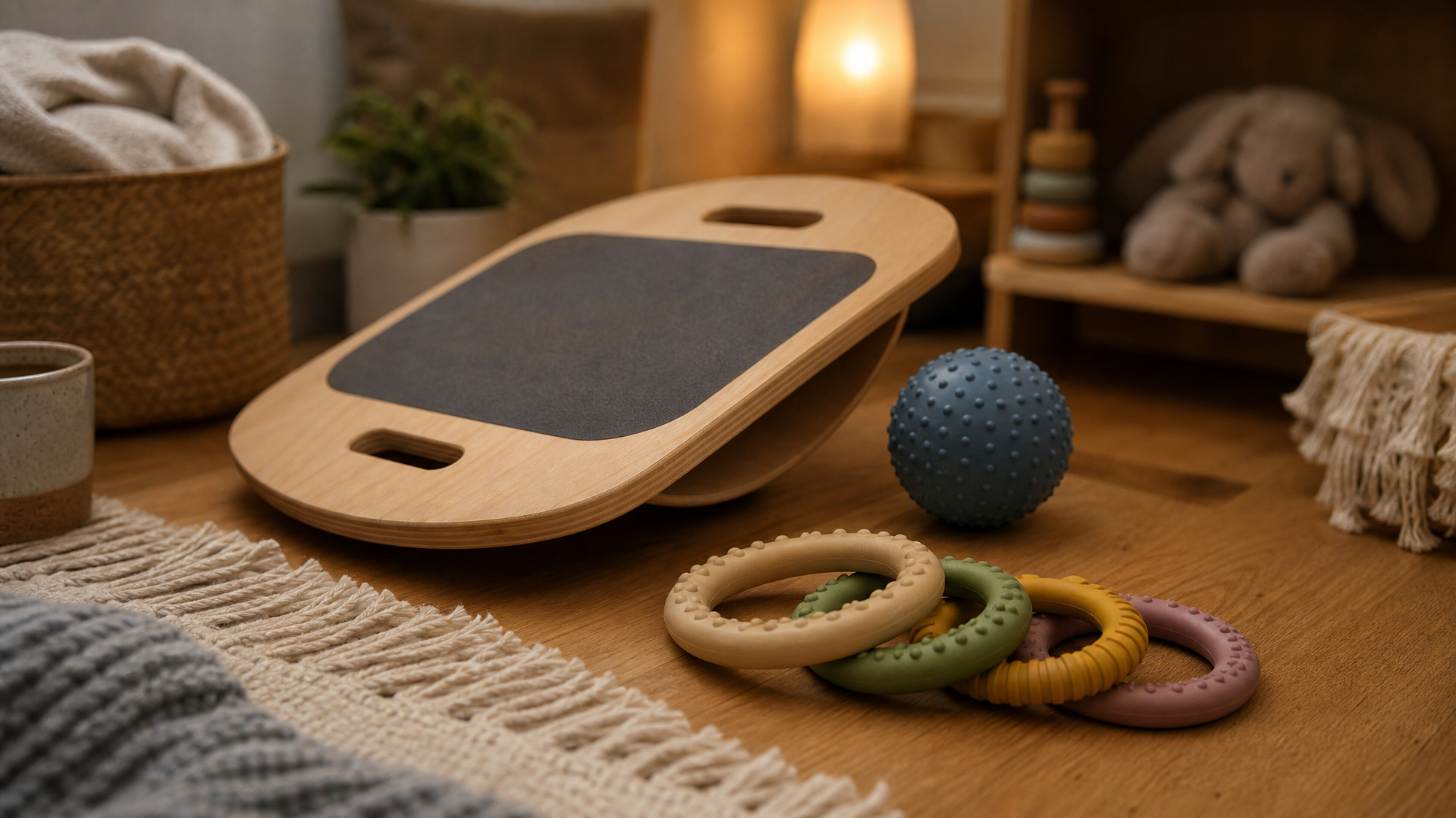
How to Tell a Genuine Sensory Toy from a Label Slapped on Anything
Here's a quick gut-check. A sensory toy should do at least one of these things clearly and intentionally:
- Offer varied or unusual texture, weight, or resistance for the hands and body
- Encourage movement, balance, or proprioceptive input (pushing, pulling, rocking, spinning)
- Provide controlled visual or auditory stimulation appropriate for the child's age
- Allow open-ended exploration rather than a single correct way to use it
A toy that does none of those things but has "sensory" in the name is just a toy — which is fine, but it's worth knowing the difference when you're shopping with a specific developmental goal in mind.
Age also matters. A sensory bin of dried pasta is appropriate for a three-year-old; it's a choking hazard for a one-year-old. A vestibular swing designed for a six-year-old won't provide the right input for a toddler. The best sensory toys are matched not just to a child's sensory needs but to their developmental stage.
A Note on "Calming" Claims
You'll often see sensory toys marketed as calming. Some are. Deep-pressure input — like squeezing a stress ball or wearing a weighted blanket — does activate the parasympathetic nervous system for many children, which promotes a calmer state. Rhythmic vestibular input, like slow rocking, has a similar effect. But not every sensory toy calms every child. Spinning, for instance, is alerting for some kids and dysregulating for others. Pay attention to how your specific child responds rather than assuming the label tells the whole story.
If you want to explore developmental and sensory-friendly options organized by age — so you're not sorting through a wall of products trying to guess what's appropriate — Toytooth's baby and toddler toy collection is a good starting point, and the activity centers section covers a range of multi-sensory options for early development. Shopping by age and category makes it easier to find something that actually fits where your child is right now.
Frequently Asked Questions
At what age should I start using sensory toys?
Sensory play starts at birth. Newborns benefit from high-contrast visual patterns and gentle tactile variation. As babies grow into toddlers, you can introduce more complex textures, movement-based toys, and materials like play dough or kinetic sand. The key is matching the toy to the child's developmental stage — not just their age in months, but where they actually are in their motor and sensory development.
Do sensory toys only benefit children with autism or sensory processing disorder?
No. Sensory play supports neurological development in all children. Every child's nervous system needs varied input to mature — it's just that children with sensory processing differences, autism, or ADHD may need more intentional, targeted sensory experiences than typical play naturally provides. Sensory toys are useful for the full range of children; they're just especially important for some.
Can too much sensory stimulation be harmful?
For sensitive children, yes — overwhelming sensory input can cause distress rather than calm. The goal is the right amount and type of input for that specific child, not maximum stimulation. Watch your child's cues: if they're pulling away, covering their ears, or becoming more dysregulated during a sensory activity, dial it back. More is not always better.
How is a sensory toy different from a regular toy?
The distinction is about intent and design. A sensory toy is specifically designed to engage one or more sensory systems — tactile, vestibular, proprioceptive, visual, or auditory — in a deliberate way that supports neurological development. A regular toy may incidentally provide sensory input, but it isn't built around that purpose. In practice, the line blurs often, which is why the label alone isn't a reliable guide — looking at what the toy actually does is more useful than what it's called.

